Which fly trap should you choose? A hanging bag fly trap is a practical disposable option with bait included, while a fly trap bottle is a reusable container available in several sizes. The better choice depends on fly pressure, how often you want to handle the trap and whether the site needs a low-cost rotation or a longer-term hanging format.
Quick comparison
| Feature | Hanging bag fly trap | Fly trap bottle |
|---|---|---|
| Typical role | High-volume outdoor capture and easy replacement | Reusable hanging trap for gardens, patios and mixed outdoor sites |
| Main materials | PP and PET bag with fine mesh and conical inlet | Clear PET body with funnel inlet and screw lid |
| Preparation | Add water to activate the included bait | Use the compatible bait according to the product instructions |
| End of cycle | Remove the complete disposable bag | Open, clean and refill the reusable bottle |
| Best maintenance fit | Simple replacement at active hotspots | Regular inspection and cleaning |
Choose the hanging bag when replacement is simplest
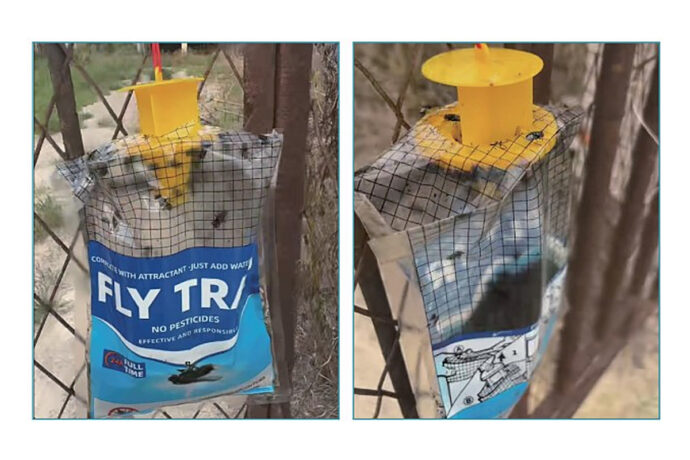
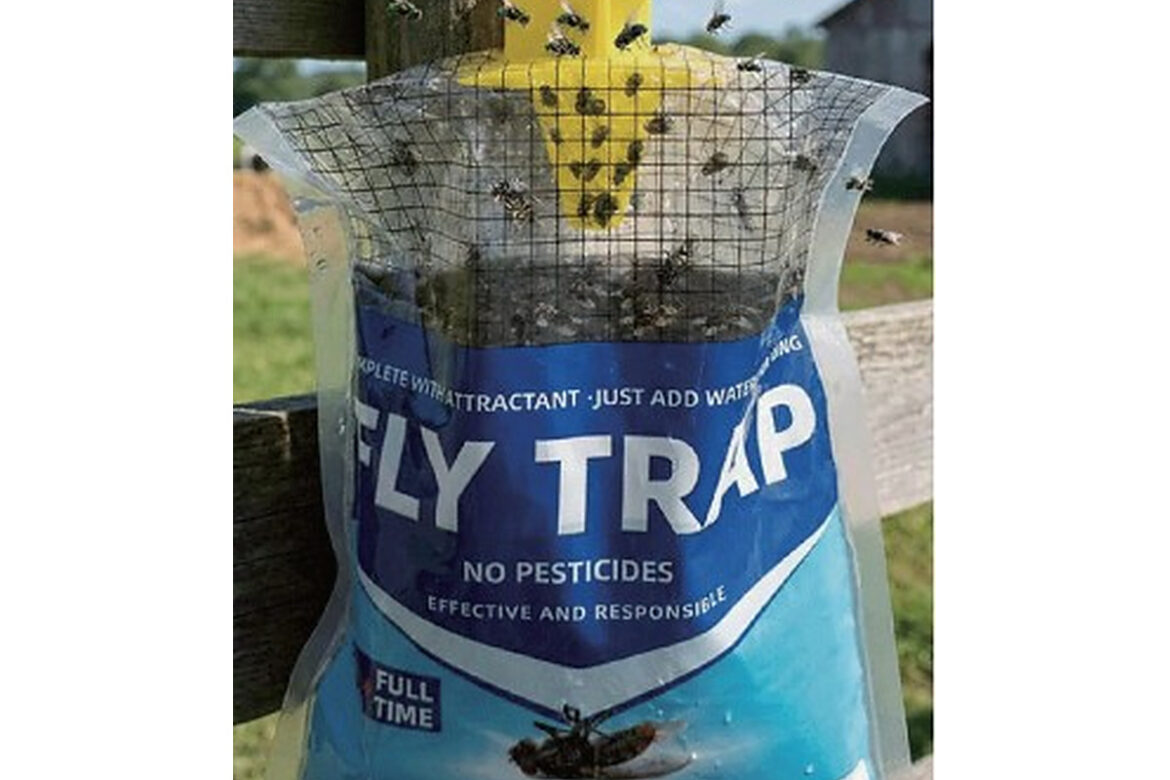
The bag measures 19.5 × 8 × 25.5 cm and contains 20.5 g of bait. Add clean water, hang it securely and check the transparent collection area regularly. It is a good fit when a site manager wants a simple consumable that can be replaced without cleaning the collection body.
Choose the bottle when reuse matters
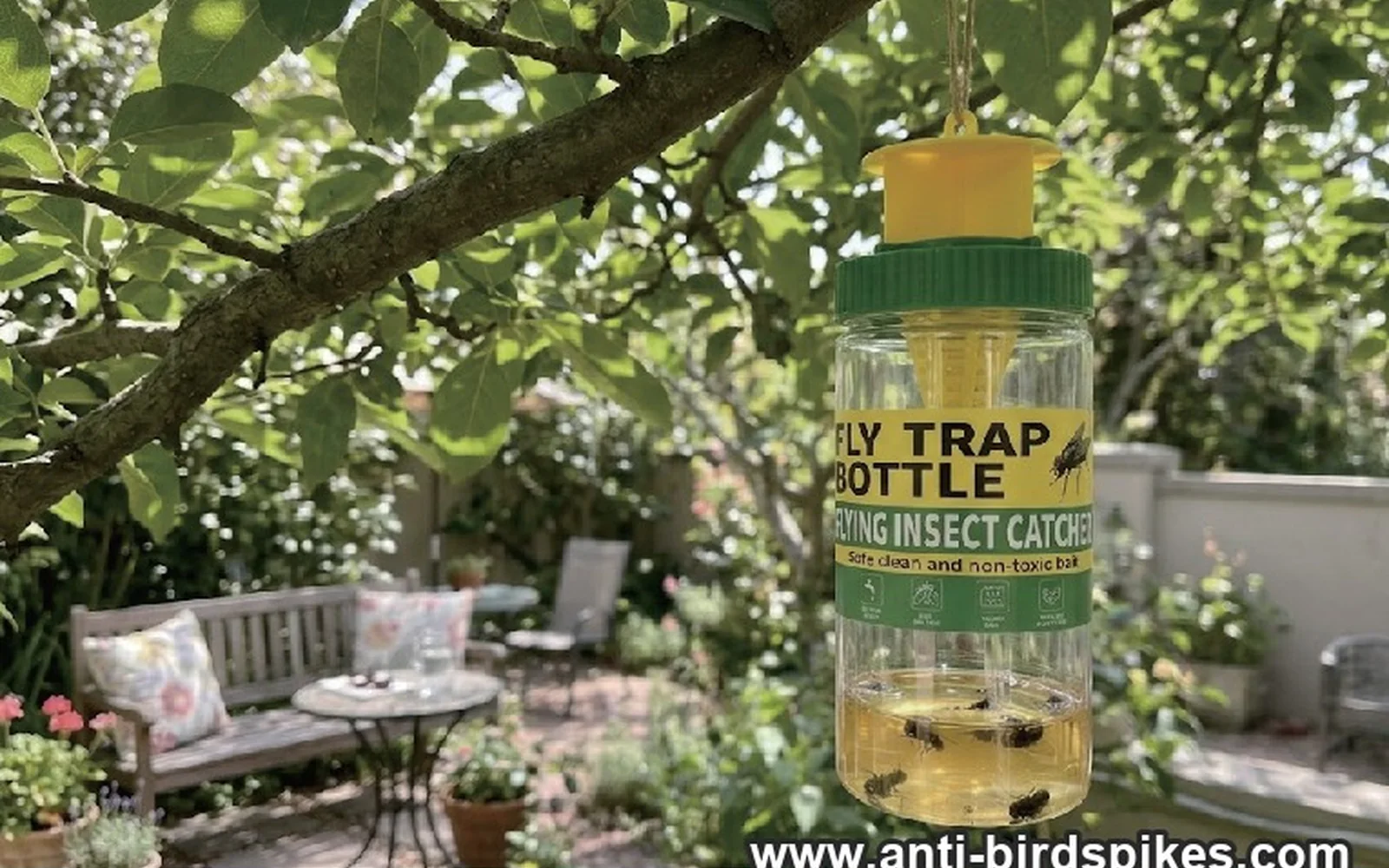
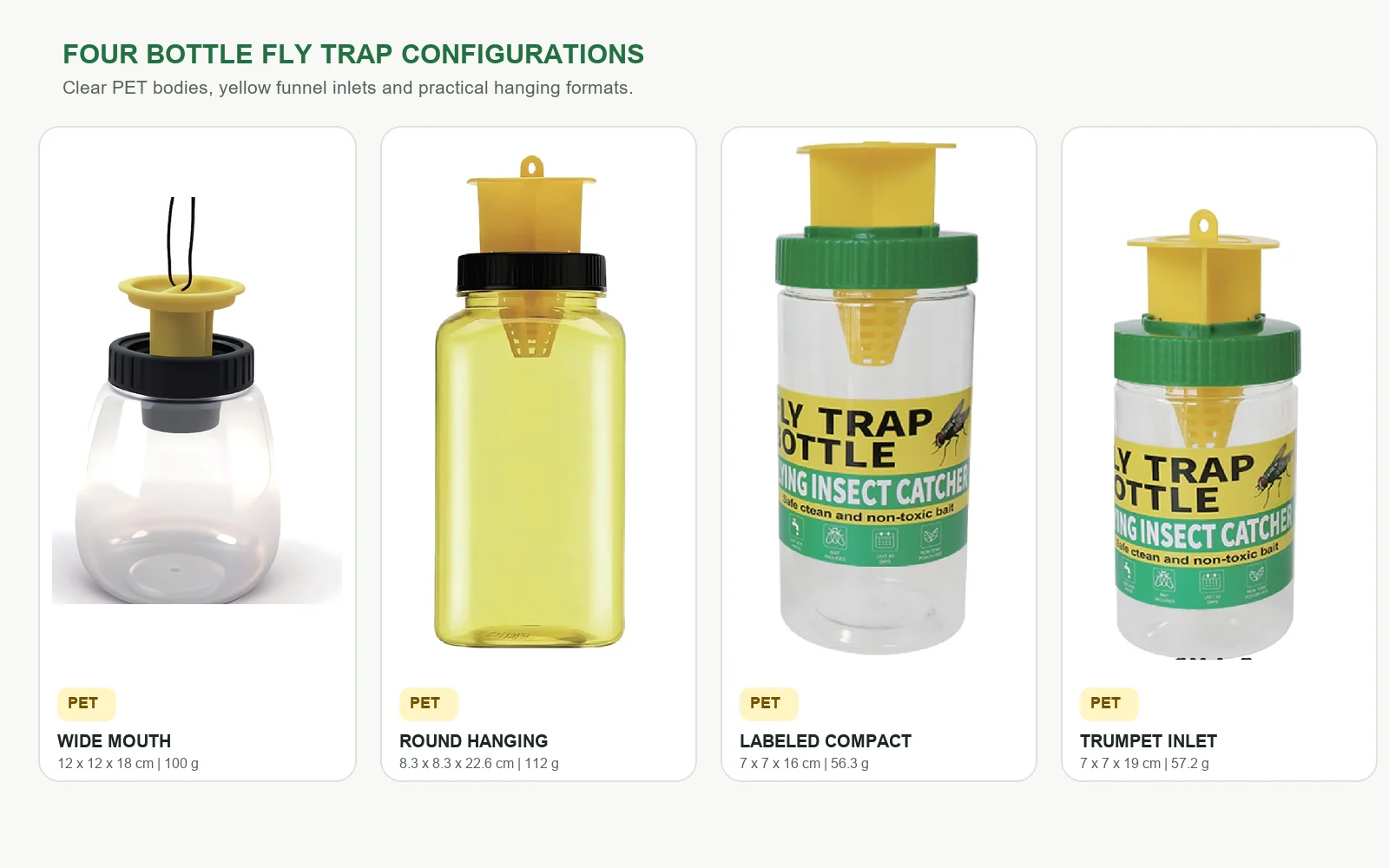
The bottle format suits households, patios, garden borders and smaller outdoor work areas where a reusable hanging product is preferred. Four shown configurations range from compact 7 × 7 × 16 cm and 7 × 7 × 19 cm bottles to larger round and wide-mouth bodies. The screw lid and clear body make inspection easier, but cleaning and refilling are part of the routine.
What to compare before ordering
- Fly pressure: choose enough units to cover separate activity zones.
- Maintenance: a disposable bag reduces handling; a bottle requires cleaning.
- Placement: both formats need stable hanging points and clearance from people, pets and food.
- Storage: bag traps take more space per unit; bottles are bulkier for the same quantity but reusable.
- Product mix: a trial order can help confirm the preferred format and pack quantity.
Related product guides
See the hanging bag fly trap or the reusable hanging fly trap bottle. For setup help, read how to use pesticide-free fly trap bags; for poorer-than-expected results, use the bottle trap quick checks.
Frequently asked questions
Which trap is easier to dispose of?
The hanging bag is designed as a disposable one-piece unit. Put the full bag into the waste stream according to local rules; do not empty it to reuse it.
Which trap is more economical for long use?
A reusable bottle avoids replacing the container each cycle, but it needs bait, cleaning and inspection. Compare total handling effort as well as the product price.
Can I mix both formats in one order?
Yes. Send the required bag quantity, bottle styles, packaging preference and delivery destination for a mixed quotation.
Request a fly trap sample or quotation
Tell us the application, expected quantity, preferred format and destination market. We can help plan a sample or mixed order.