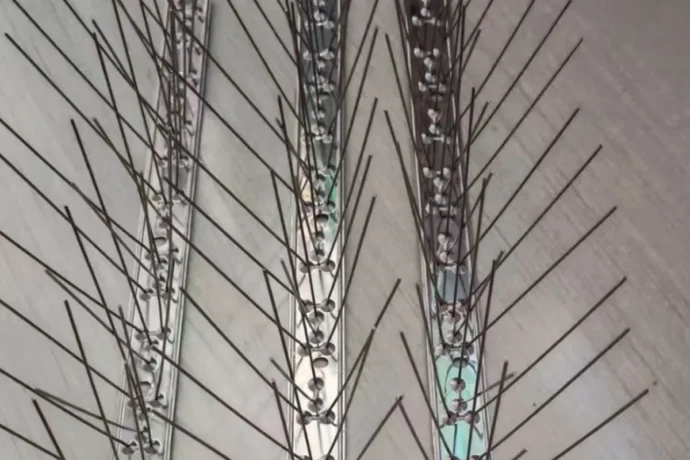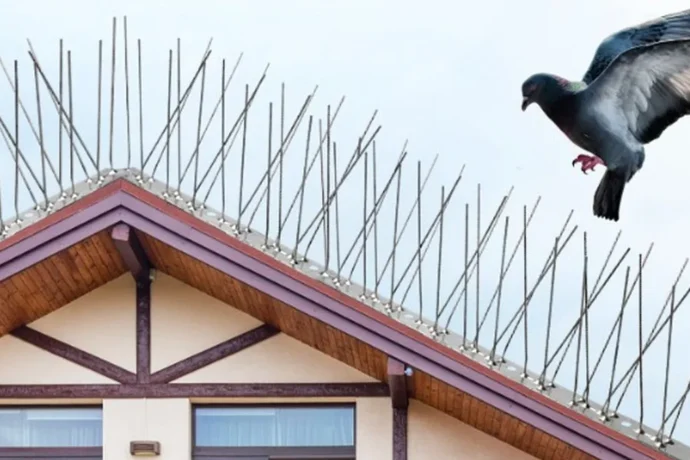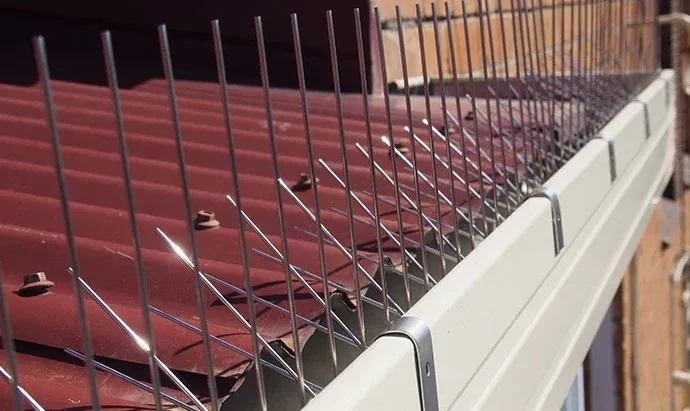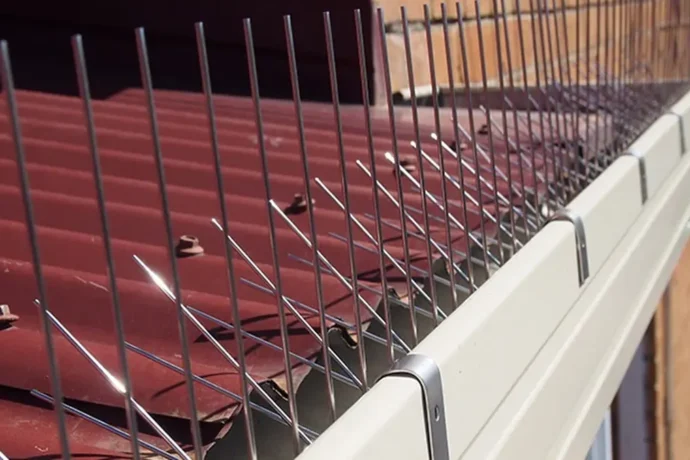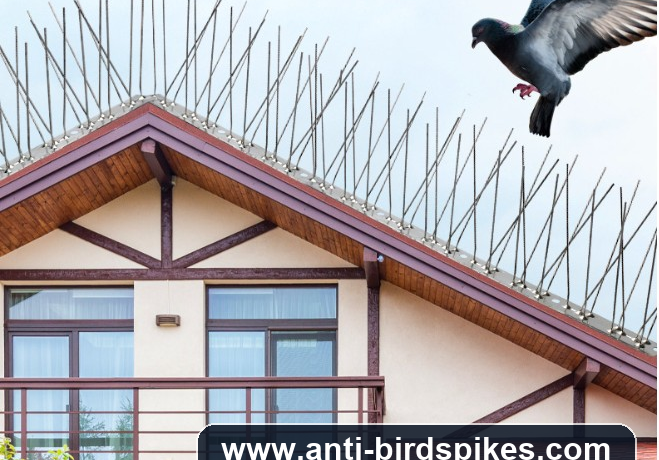
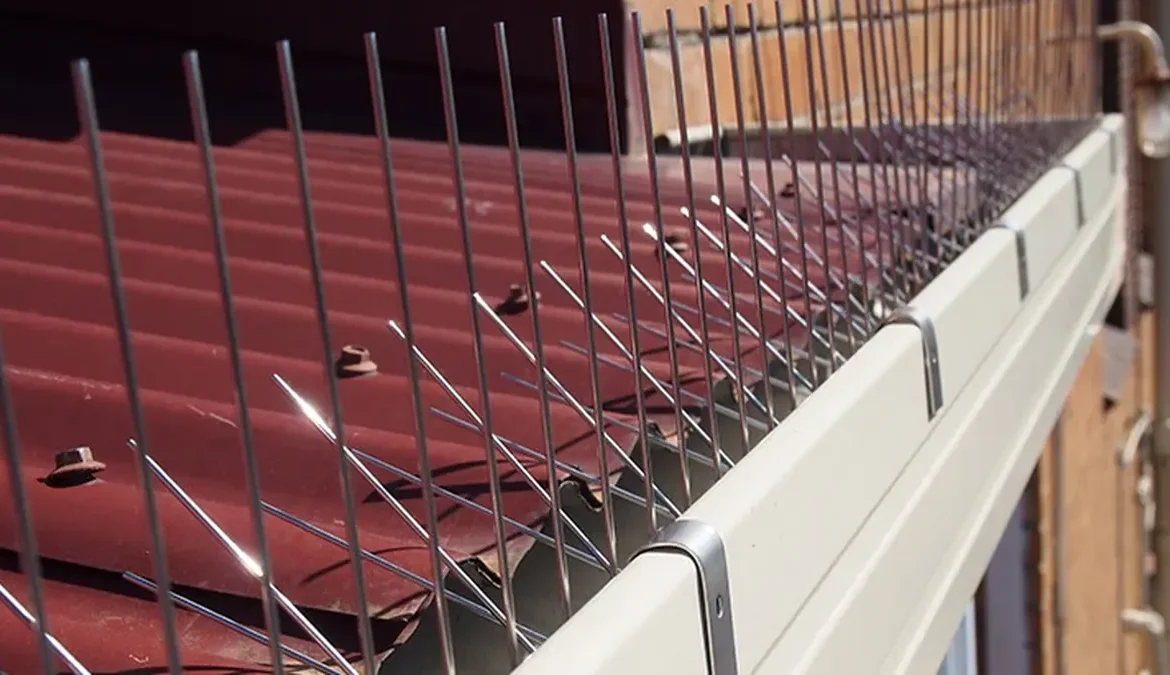
Bird spikes for gutters work by making the flat gutter rim unsuitable for pigeons and other birds to land. Fit strips only where they preserve the water channel, roof drainage and maintenance access. The objective is full coverage of the landing strip, not a line of spikes laid across the gutter opening.
What are bird spikes for gutters?
Bird spikes for gutters are narrow strips of blunt, upward-facing pins mounted on the flat rim or supporting ledge beside a gutter. They prevent birds from settling on that surface without closing the channel that carries rainwater away. Gutter spikes bird control is therefore a landing deterrent, not a gutter guard.
Gutter spikes for birds are most useful where a repeating perch creates droppings on a doorway, walkway or equipment below. They should be specified around the observed landing surface rather than the most convenient piece of gutter to reach.
This distinction matters. A strip placed across the open channel can collect leaves, restrict water or interfere with cleaning. A strip mounted on the protected outer lip can discourage perching while leaving the trough available for inspection.
Where bird spikes for gutters are useful
Start by watching where birds land after approaching the roof. Pigeons often use the broad outside lip where the gutter meets the fascia, a flat rain-collection box, an eaves return, or the upper edge of a downpipe head. A narrow strip is most useful on one of those repeat landing surfaces.
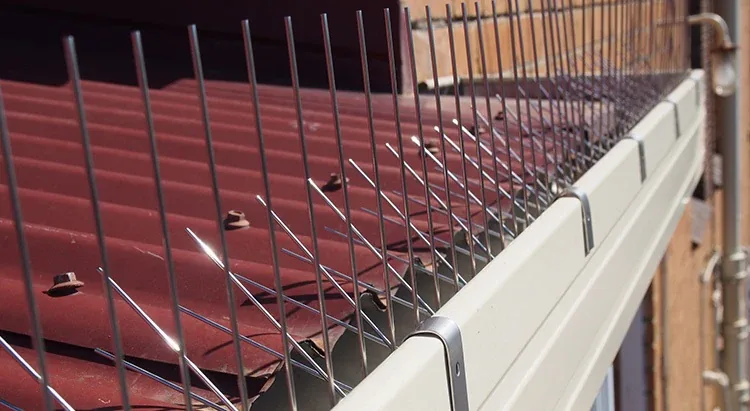
Pigeon spikes for gutters can also protect a short section above a doorway, window or exterior walkway where droppings create a cleaning problem. Where birds fly directly into a roof opening or build behind the gutter, a ledge product will not solve the route into that protected space. That problem needs inspection and physical exclusion designed for the opening.
Measure the landing strip before buying
Record four dimensions: the usable width of the landing surface, the total protected length, the height of any obstruction and the location of every downspout. Photograph the whole gutter run and a close view of the fixing surface. Include corners, end caps and changes in roof height.
| What to check | Why it matters | Before ordering |
|---|---|---|
| Landing width | A strip must cover the surface a bird can grip. | Compare the measurable landing depth with the base width. |
| Water route | Leaves and standing water must still move away. | Keep the channel, outlet and cleaning access unobstructed. |
| Surface material | Adhesive, screws and ties suit different materials. | Confirm the gutter, fascia and coating before selecting fixings. |
| Exposure | Wind, salt and rain affect retention and material choice. | Ask for grade and fixing guidance for the project location. |
Allow extra material for corners, cutting waste and short transitions. Do not assume that two short pieces at the worst droppings spot will protect the full landing line. Birds can shift a few centimetres to the nearest uncovered edge.
How to fit bird spikes for gutters safely
- Clean and inspect. Remove debris and check whether the gutter is already loose, blocked or damaged.
- Choose the protected rim. Mark the outer landing strip while keeping the channel open.
- Dry-fit the layout. Cut full sections, plan corners and check that downspouts remain accessible.
- Prepare the surface. Use the adhesive or mechanical fixing specified for the actual gutter and fascia material.
- Fix each strip securely. Follow the product’s spacing and curing requirements; add mechanical retention where wind loads require it.
- Check water flow. Run water at a safe location and confirm it reaches the downspout without pooling.
- Recheck after weather. Look for lifted sections, trapped debris and new landing spots beside the installation.
What not to do
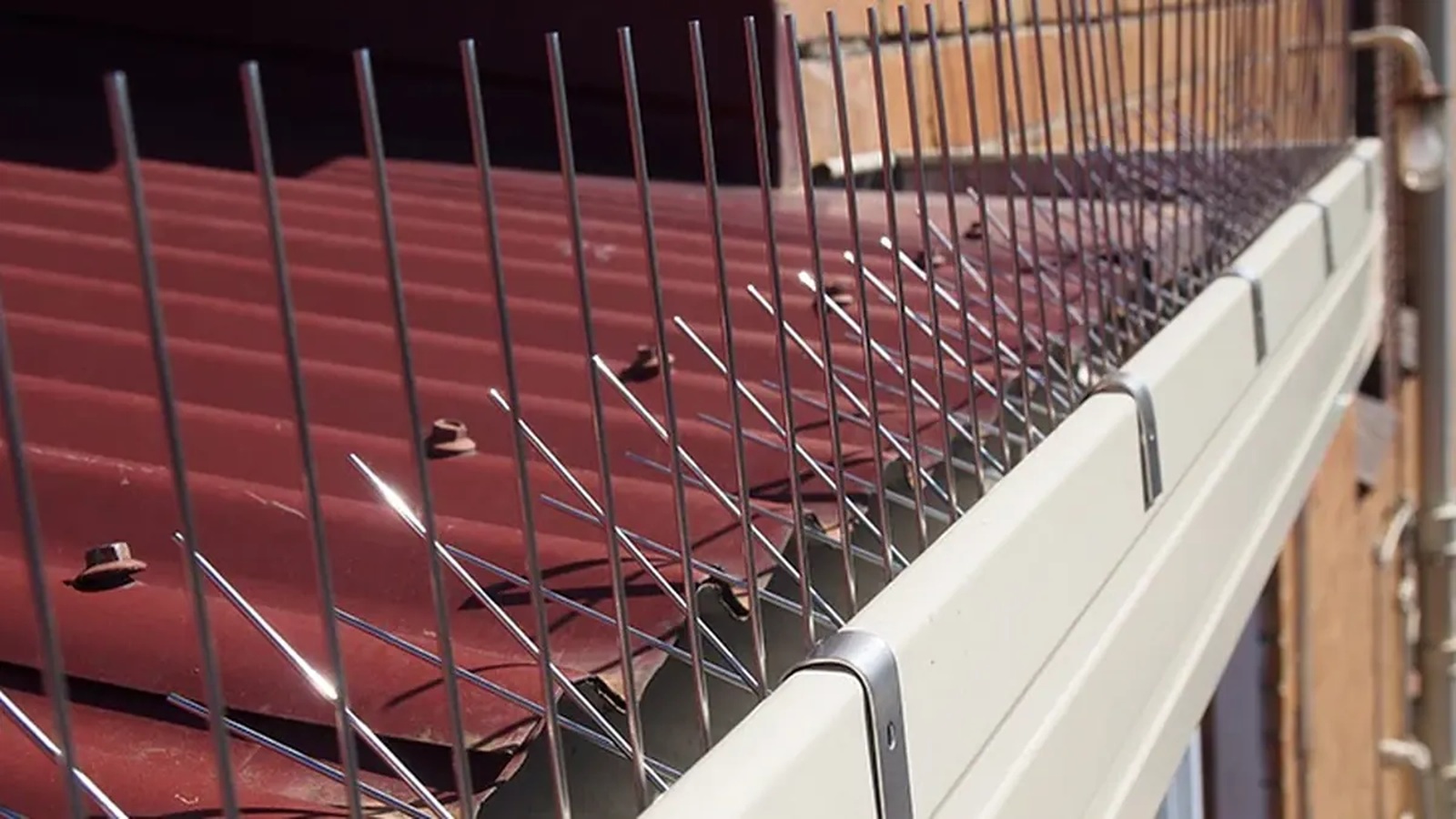
- Do not place spikes over the open trough if they can catch leaves or block cleaning.
- Do not cover only the front rim when pigeons can stand on the wider fascia behind it.
- Do not drill through a waterproofing layer or concealed service without approval.
- Do not rely on adhesive alone where the surface is dusty, damp, crumbling or highly wind-exposed.
- Do not disturb an active nest; check local wildlife rules before removing nesting material.
Frequently asked questions
Where should spikes go on a gutter?
Use them on the flat outer landing rim or adjacent ledge that birds actually occupy. Preserve the water channel, downspout opening and the route needed for cleaning and repair.
Will gutter spikes block rainwater?
They can if installed across the open channel. Keep pins on the protected landing strip and clear debris during routine roof maintenance. Check water flow immediately after installation.
Are adhesive gutter spikes enough?
Adhesive can be suitable on a sound, clean and compatible surface. Exposed locations may need mechanical fixings or a combined method. Confirm the fixing plan for the specific gutter and wind exposure.
Do spikes stop birds nesting behind the gutter?
Not necessarily. If birds enter a sheltered gap, inspect the opening and use appropriate exclusion that does not trap the birds or block drainage and ventilation.
Choose the right gutter spike system
Compare our 304 stainless steel bird spikes, clear PVC bird spikes and flexible black PP bird spikes. For roof-specific methods, read the bird spike installation guide and the weather maintenance checklist.
Need help planning a gutter installation?
Send photos of the gutter rim, protected length, target bird, surface material and project country. We will help confirm a suitable strip and fixing direction.
This guide provides general planning and safety information. Confirm the specific product, fixing and installation requirements for the site before ordering.
Source and further reading
- OSHA — Fall Protection, for working safely at height.
- Anti-Birdspikes Bird Control Guide Library, for related installation and maintenance guidance.