
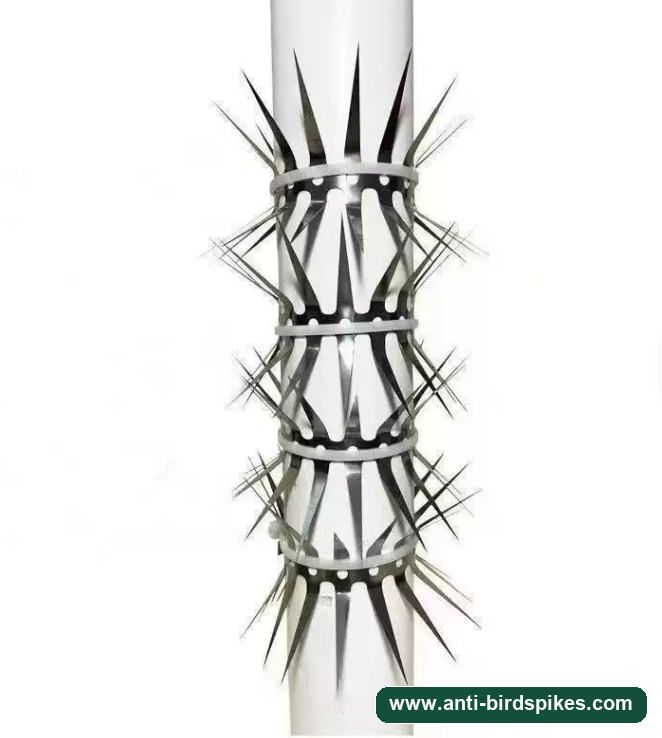
Rat spikes for pipes add a ring of stainless steel points around a drainpipe or service line. They make the route uncomfortable to climb, so rats and mice are less likely to use the pipe to reach a roof, shed or piece of equipment. They are physical deterrents, not traps or poison.
How rat spikes for pipes work
The bendable strip is wrapped around the pipe and fixed in one or more rings. The outward points interrupt the continuous surface a rodent would use for grip. More than one ring can be used where the pipe is easy to reach from a nearby wall or branch.
How to fit the strips
- Inspect the route. Check where rodents approach the pipe and identify nearby jump-off points.
- Measure the pipe. Confirm the diameter and a clear section where the strip can sit securely.
- Cut and bend. Wear gloves and use suitable cutting tools to shape the strip around the pipe.
- Fix each ring. Use a compatible tie or fixing, then check that the strip cannot slide or leave a climbing gap.
Placement and safety checks
- Keep the spikes away from doors, walkways, handrails and areas where people or pets may brush against them.
- Do not install them near moving machinery, hot engine parts or electrical components.
- Remove branches, stacked materials or cables that give rodents an alternative route around the barrier.
- Inspect the fixing points after strong wind or maintenance work.
Limitations
Spikes only protect the pipe section where they are fitted. Rodents may climb another pipe, use an adjacent wall or enter through a gap. Use the strips alongside sanitation, entry-point repairs and suitable trapping where an active infestation is present.
Our stainless steel rodent spikes are available in 5 cm and 3.3 cm strip sizes. Browse the rodent-control product range, or compare the stainless steel drain rat guard for drain openings.
Article reviewed by the Anti-Birdspikes product team, October 31, 2026. Installation conditions and local safety requirements vary.

Leave a comment