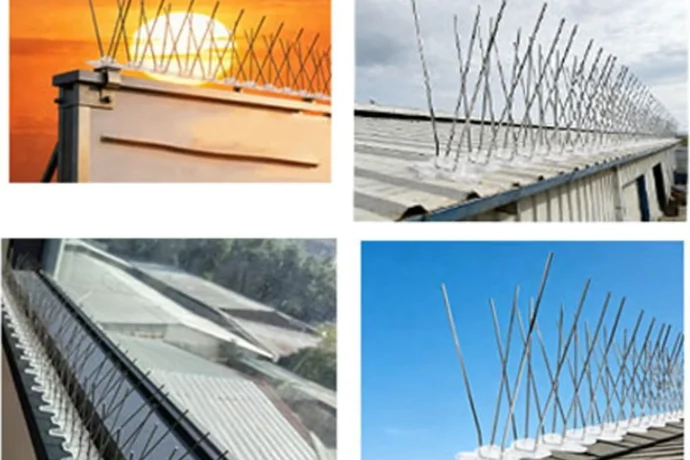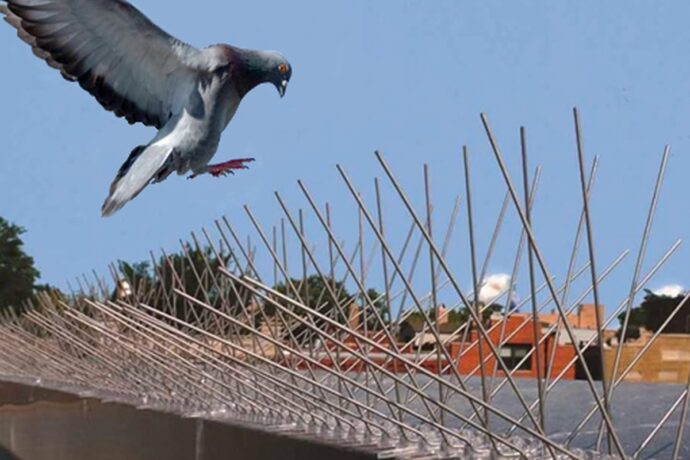

Commercial bird control for storefronts works best when it removes the specific landing points around a shop, rather than adding deterrents to every visible surface. Begin with the window heads, cornices, fascia, signs, lighting brackets and service routes. Then select a physical barrier that preserves customer access, façade appearance and maintenance.
Why birds return to storefronts
A shopfront combines several features birds look for: shelter from wind and rain, a clear view of the street and a choice of narrow ledges. Warm light fittings, projecting signs and recessed window heads can be especially attractive. Food displays, waste bins and spillage can add another reason to stay nearby.
Cleaning droppings without changing those conditions usually produces temporary relief. A better commercial bird deterrent plan identifies the perch, approach route and attractant together. For shops with a recurring pigeon problem, a targeted commercial pigeon control assessment should also check nearby food waste, loading bays and sheltered signs.
Survey the frontage before choosing commercial bird control
Walk the frontage at two different times of day if possible. Photograph active landing points, note the species where it can be identified and measure every affected surface. Include the returns at corners, the gap beside projecting signs and any upper ledge that birds can reach from the same route.
| Storefront surface | Why birds use it | What to check |
|---|---|---|
| Window heads and sills | Stable, often sheltered landing strip | Full depth, opening direction, cleaning access and glass clearance |
| Cornices and fascia | Long sightline with room to perch | Continuous coverage, joints, drainage and fixing substrate |
| Projecting signs | Raised platform above pedestrians | Electrical fittings, brackets, service access and wind loading |
| Exterior lights | Warm support and exposed bracket | Heat clearance, lamp changes, cables and mounting strength |
| Awnings and canopies | Sheltered ledge near entrances | Whether the frame is rigid; avoid fabric and moving parts |
| Service routes | Quiet edges beside bin and delivery areas | Access, hygiene, drainage and nearby alternative perches |

Match the bird-control method to the route
Bird control spikes are a fit for a defined landing strip. They do not close a doorway, fill a recessed alcove or cover the open underside of a canopy. Those conditions usually call for netting, screening or a building repair instead.
| Method | Best use | Avoid where |
|---|---|---|
| Bird spikes | Narrow window heads, firm cornices, sign tops and fixed rails | The surface is fragile, hot, flexible or needs frequent access |
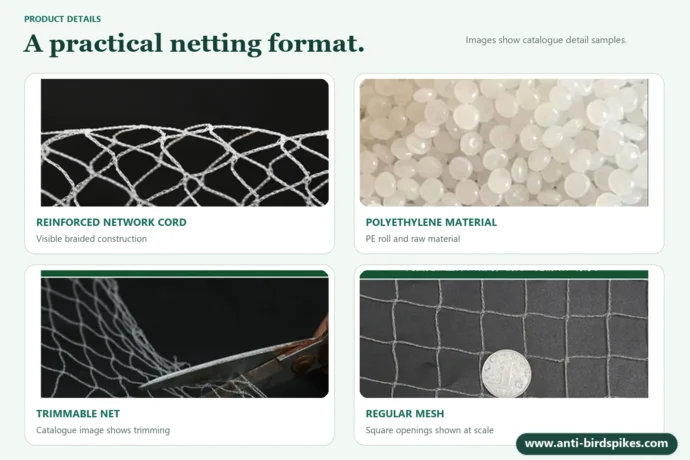
| Bird netting | Open voids, recesses, canopies and larger protected volumes | There is no sound frame or safe tensioning route |
| Reflective ribbon | Temporary disturbance over open outdoor areas | There is no wind or light, or the shopfront appearance is sensitive |
| Habitat changes | Removing food, water and sheltered nesting opportunities | Treating it as a substitute for a physical barrier |
For many storefronts, the practical answer is a combination: spikes on the fixed ledges and a net or closure detail where birds enter an open volume. The bird spikes versus netting comparison explains how the two mechanisms differ.
Where bird spikes for storefronts work best
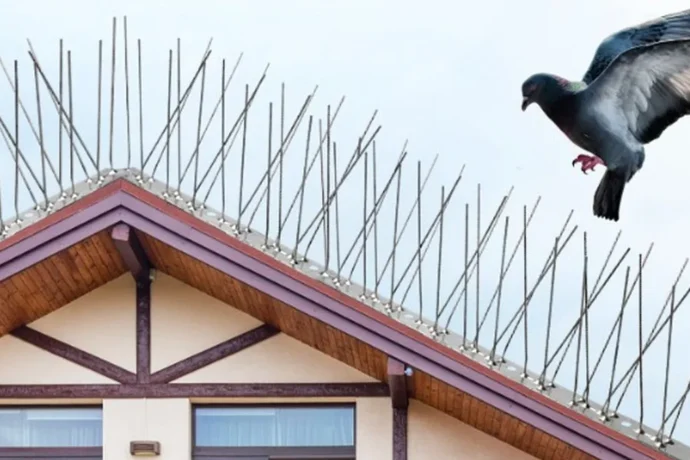
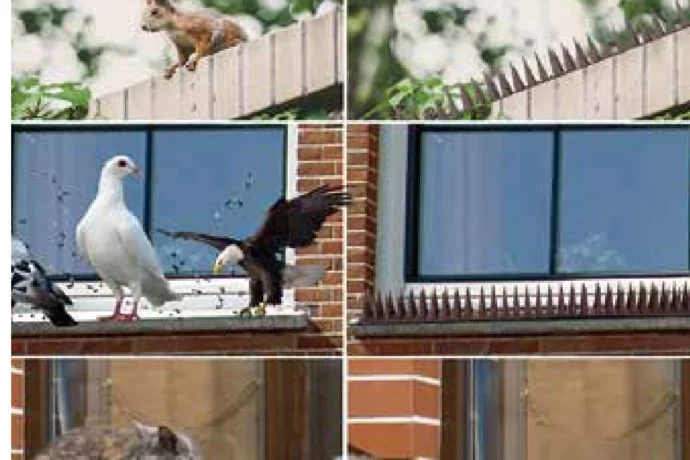
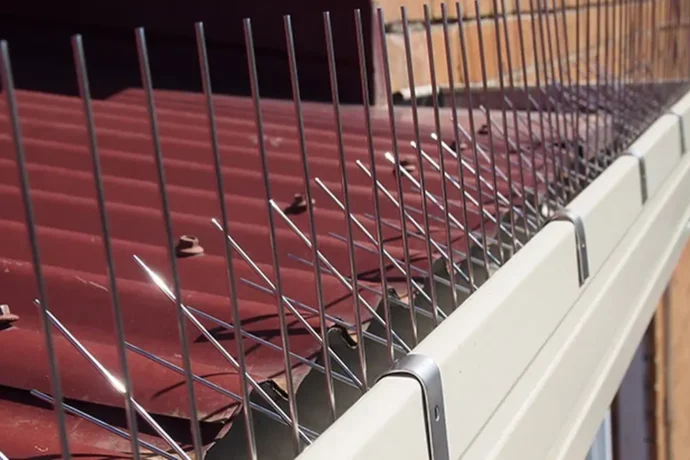
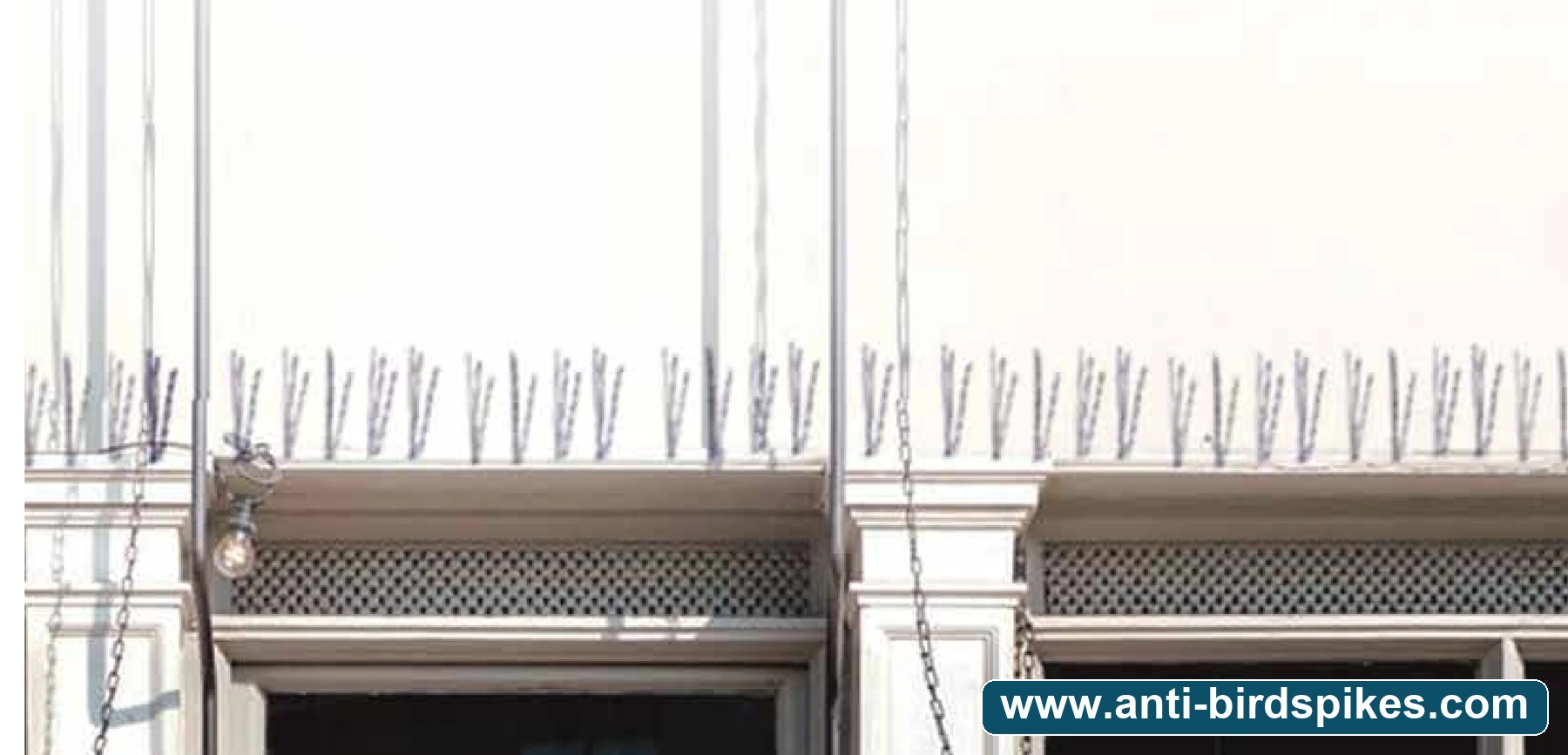
Bird spikes for storefronts are most useful where birds land repeatedly on a narrow, stable surface. A continuous row across the complete landing depth is more dependable than isolated strips placed only where droppings are most visible.
Bird prevention spikes, whether metal or plastic, should be selected for the actual ledge width, fixing surface and maintenance route rather than appearance alone.
- Window heads: protect the horizontal trim above glass without covering vents or opening hardware.
- Sign supports: close the upper rail while leaving electrical access and safe maintenance routes.
- Cornices and fascia: extend coverage around corners, returns and adjoining ledges.
- Rigid awning frames: protect fixed metal supports rather than fabric or moving parts.
- Light brackets: keep heat and lamp replacement clearance in the installation plan.
Plan installation around opening hours
For a busy shop, access and safety planning matter as much as product selection. A short work window may be enough for small upper ledges, but extensive signage or high-level work may need a planned closure or a qualified contractor.
- Confirm the work zone. Mark customer entrances, delivery routes and pedestrian protection before work begins.
- Inspect each substrate. Confirm whether the surface accepts adhesive, mechanical fasteners or another approved fixing.
- Dry-fit the strips. Plan joins, corners and cuts before opening adhesive or drilling.
- Protect services. Keep electrical fittings, drainage, ventilation and signage access unobstructed.
- Check the finished route. Look from street level as well as from the work position for missed footholds.
Use appropriate access equipment and fall protection for the location. Do not lean out of windows or use unstable ladders. On occupied frontages, prevent tools and loose parts from falling into customer or pedestrian areas.
Measure the work for a useful quotation
A product-only request often leaves the installer guessing. Send a short site package with photographs and measurements so the supplier can quote the right strip format and fixing approach.
- The protected linear length of each surface.
- The usable depth of each ledge or cap.
- Substrate: masonry, metal, wood, cladding or another material.
- Number and height of work areas, plus access constraints.
- Sign, light and awning details that interrupt the run.
- Target bird species, current activity and preferred finish.
SK-430 is one option for storefront and window-edge projects. The SK-430 bird spike product page lists a 30 × 2.1 × 10 cm PP strip, 10 strips per box and 28 boxes per outer carton. Confirm the fixing, coverage and accessories for each surface rather than ordering from dimensions alone.
Maintain the frontage after installation
Inspect the strips during routine exterior cleaning and after storms. Check for loose bases, bent pins, blocked drainage and debris caught behind the product. Keep nearby signs and lights serviceable; a fixing that makes maintenance difficult will usually be altered or removed later.
Do not dry-sweep accumulated droppings in a busy entrance area. Use appropriate personal protective equipment and local cleaning guidance, and arrange specialist cleaning where contamination is extensive. The U.S. Centers for Disease Control and Prevention provides information about histoplasmosis and bird or bat droppings.
Frequently asked questions
Are bird spikes suitable for every storefront?
No. They suit stable landing edges. Large recesses, open canopies, fragile surfaces and active nesting sites need a different assessment.
Can installation be completed while the shop is closed?
Small projects may be completed outside trading hours. Larger signs, high-level access or complex fixing may require a longer work window and a qualified installer.
Do the spikes damage signs or lighting?
They should not be fixed directly across lamps, wiring or moving parts. Review each fixture and choose an approved fixing point that preserves service access.
How do I know the bird-control plan worked?
Use a before-and-after record: photograph the treated edges, note where landings occurred and review cleaning frequency. Also check nearby untreated ledges for shifted activity.
Request storefront bird-control guidance
Planning a low-disruption storefront project?
Send the affected ledge measurements, surface materials, opening hours, photos and delivery country. We can help match the product format and quote wholesale or project quantities.
This guide provides general planning information. Confirm site-specific fixing, access and local wildlife requirements with the responsible professional.