Bird proofing mesh is the physical layer in a larger exclusion plan. It can close a repeated gap around a building, garden or service area, but only if the mesh is appropriate to the target bird and the perimeter is supported.
Quick answer
Bird proofing mesh should be selected for the target bird, opening size, exposure and support structure, then installed with every edge secured and no loose pockets. Mesh is not a substitute for repairing a weak frame or preserving required ventilation and access.
- Define the bird entry route and the full opening.
- Confirm mesh opening, cord and material with the supplier.
- Support the mesh so it remains taut without overloading the structure.
- Close corners and service penetrations as carefully as the main field.
- Inspect for trapped wildlife, wear and new gaps.
What is bird proofing mesh?
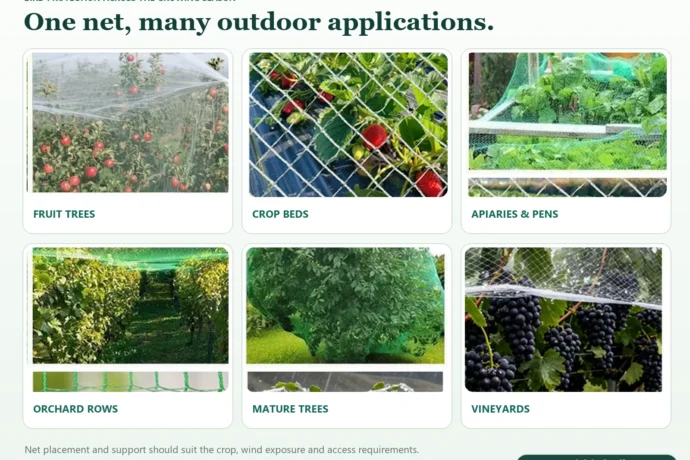
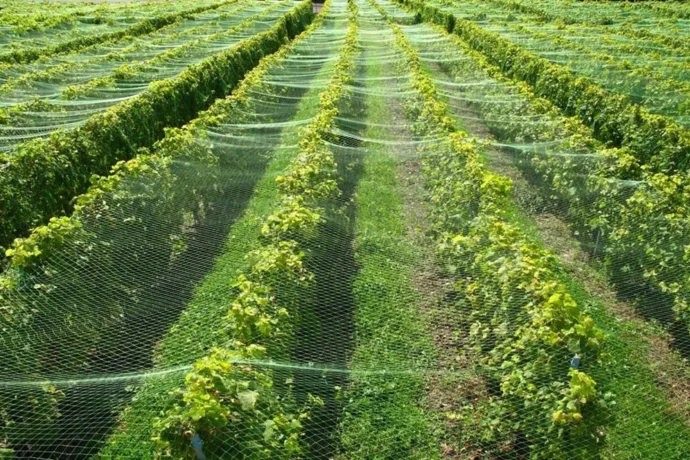
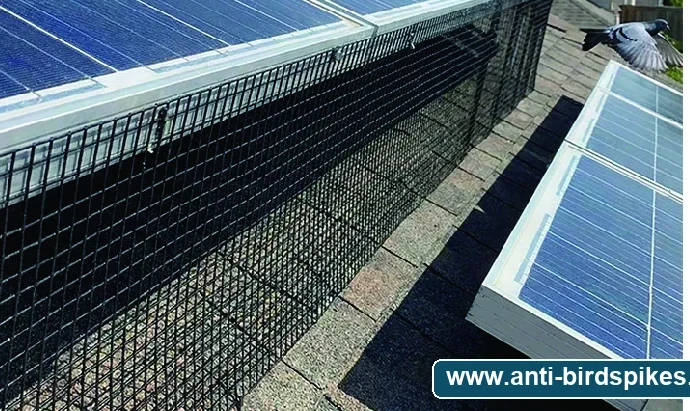
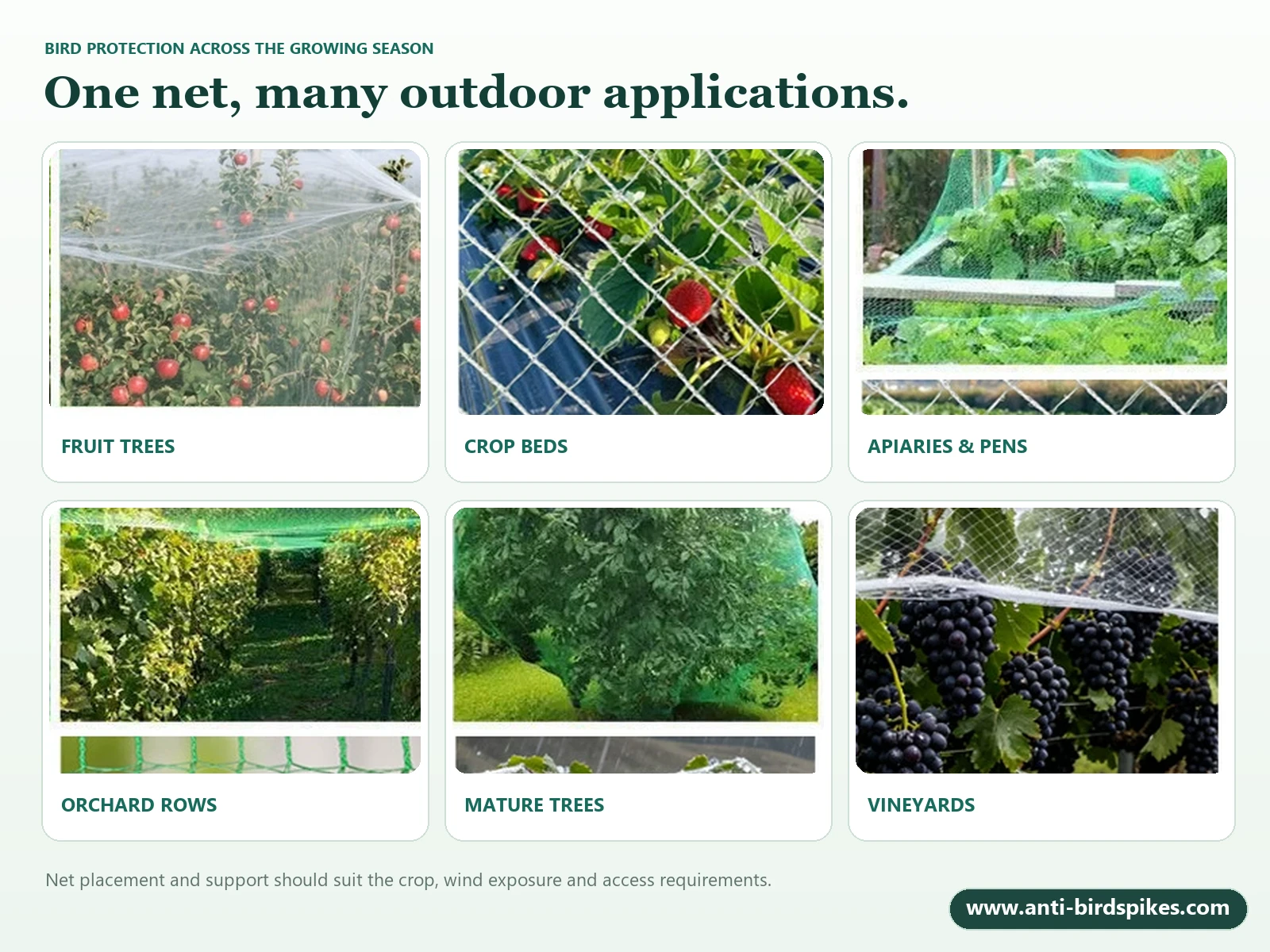
Bird proofing mesh is a flexible barrier used to close an opening or protect an area from bird entry. It may be installed as a fixed panel, a framed screen or a supported covering around an industrial, agricultural or domestic structure.
The term can describe different materials. Review the actual product rather than assuming every “bird mesh” has the same opening, strength or UV performance.
Survey the opening and the bird route
Measure the full opening and identify where birds approach from. Check whether they walk under a gap, fly through a bay or nest behind a panel. The barrier must close the route they use, not just the area where droppings appear.
- Opening: width, height, depth and irregular shapes.
- Support: sound framing, masonry or an independent structure.
- Services: cables, pipes, lights and ventilation that must remain usable.
- Access: doors, hatches, inspection and cleaning.
Choose mesh size and material for the site
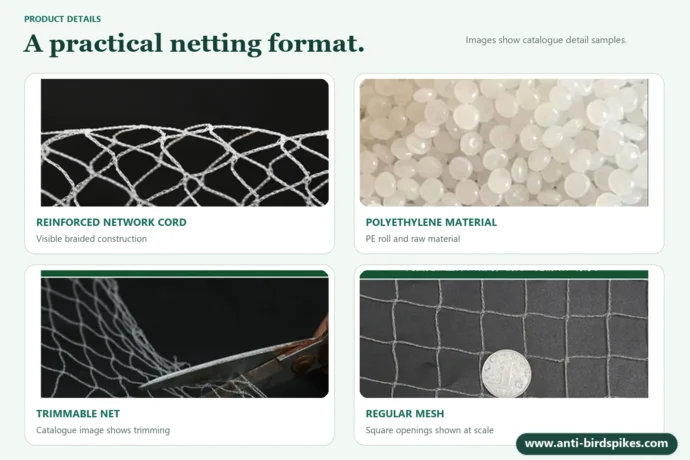
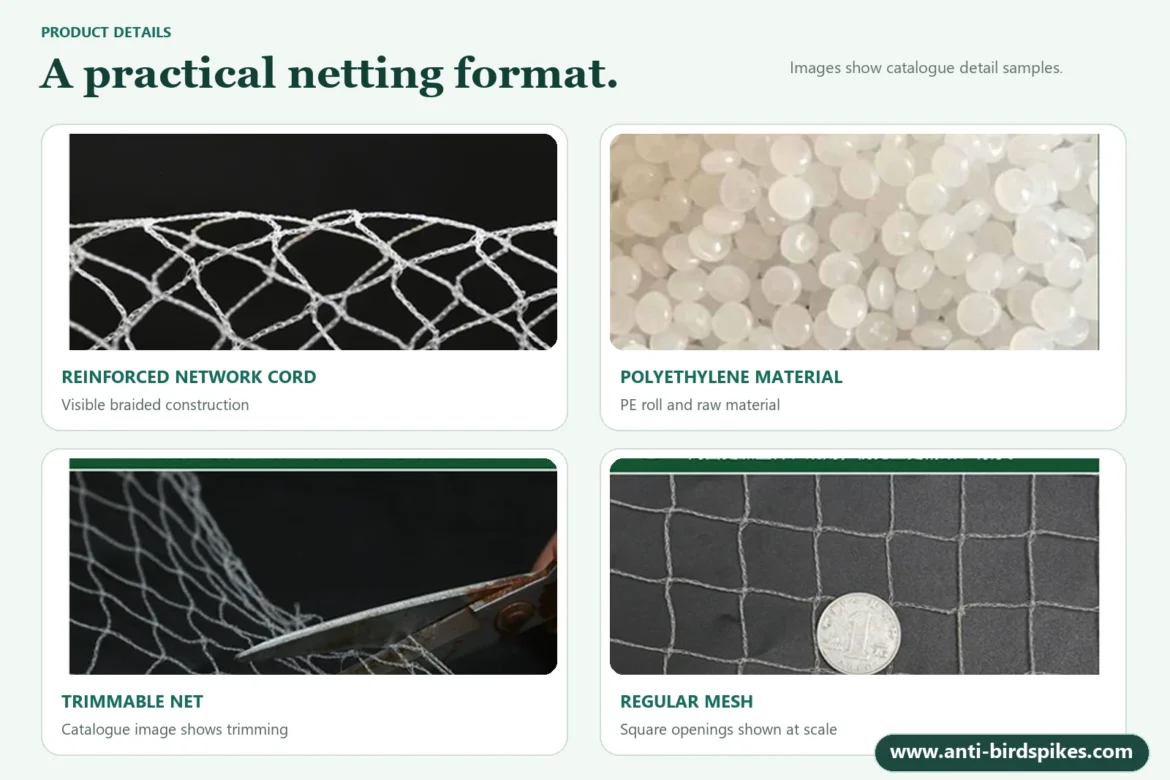
A supplier should provide the mesh opening, cord construction, roll width, colour and intended exposure. Select a product whose opening and strength are appropriate for the target birds and the installation method. Do not rely on a visual estimate from a photograph.
| Factor | Question to answer | Why it matters |
|---|---|---|
| Target bird | Which species and behaviour? | Small birds need a different fit from pigeons |
| Mesh opening | What does the supplier specify? | Controls exclusion and wildlife-risk considerations |
| Support system | How will the mesh stay taut? | Prevents sagging, wear and loose pockets |
| Exposure | Sun, wind, salt or abrasion? | Affects material life and inspection frequency |
| Access | Does a panel need to open? | Maintains service and emergency routes |
Install bird proofing mesh with a continuous perimeter
- Repair the frame. Replace loose or decayed support before attaching mesh.
- Set an access plan. Decide how people will reach doors, services and inspection points.
- Fix the perimeter. Use suitable anchors, cables or battens around the full opening.
- Tension the panel. Remove sag while avoiding point loads that can tear the mesh.
- Close penetrations. Work around pipes, cables and corners without leaving gaps.
- Inspect immediately. Confirm no wildlife is trapped and all access remains available.
Mesh, netting or bird spikes?
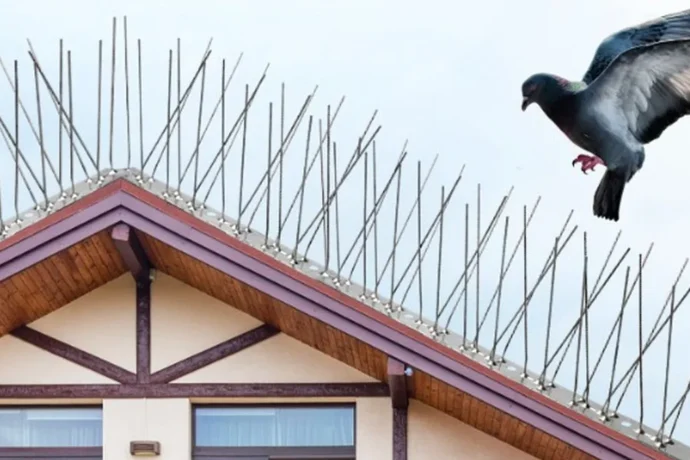
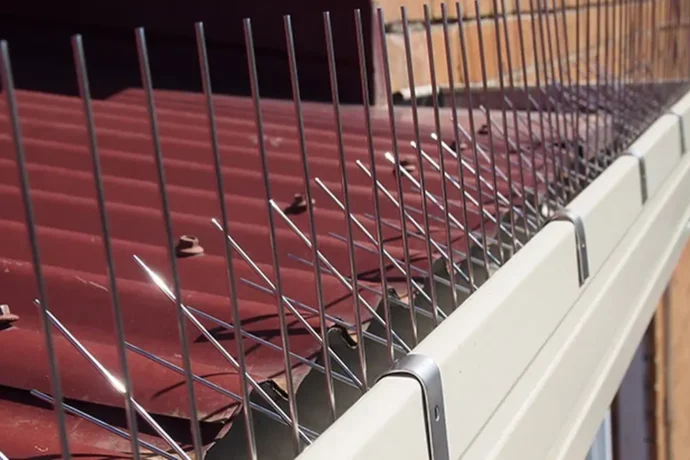
The choice depends on the geometry. Mesh and netting close an opening or protect an area. Spikes protect a defined landing surface. Using a mesh panel on the top of a narrow rail may be awkward and unnecessary; using spikes across a large opening will not close it.
Read the detailed comparison and ask the supplier for the material specification before selecting a format for a tender or purchase order.
Inspect mesh for tension, wear and trapped birds
Check the installation after high wind and on a seasonal schedule. Look for broken strands, loose edge fixings, sagging areas, abrasion against frames and debris accumulation. If an animal is trapped, stop and seek appropriate local assistance; do not pull the mesh while the animal is caught.
Repair with compatible materials and restore the original tension and edge closure. A temporary tie that leaves a loose loop can create a new wildlife risk.
Respect ventilation, access and wildlife requirements
Do not cover every opening indiscriminately. Building ventilation, livestock airflow, drainage, fire systems and emergency access may be affected. Seek specialist advice for complex buildings. Check nesting and protected-species rules before closing a site that may contain active nests.
The eave netting guide illustrates why a closure around a ventilation path needs careful planning.
Prepare a bird proofing mesh specification
Give the supplier a dimensioned sketch and a short description of the entry route. List the mesh opening, material, colour and roll width required, or ask for a recommendation based on the target birds and opening. Include the perimeter substrate and whether a frame or cable is available.
State the maximum support spacing that the installer can achieve. If a large panel has no intermediate support, the finished mesh may flap or rub against the structure. A framing detail can add cost, but it may be necessary for a durable installation.
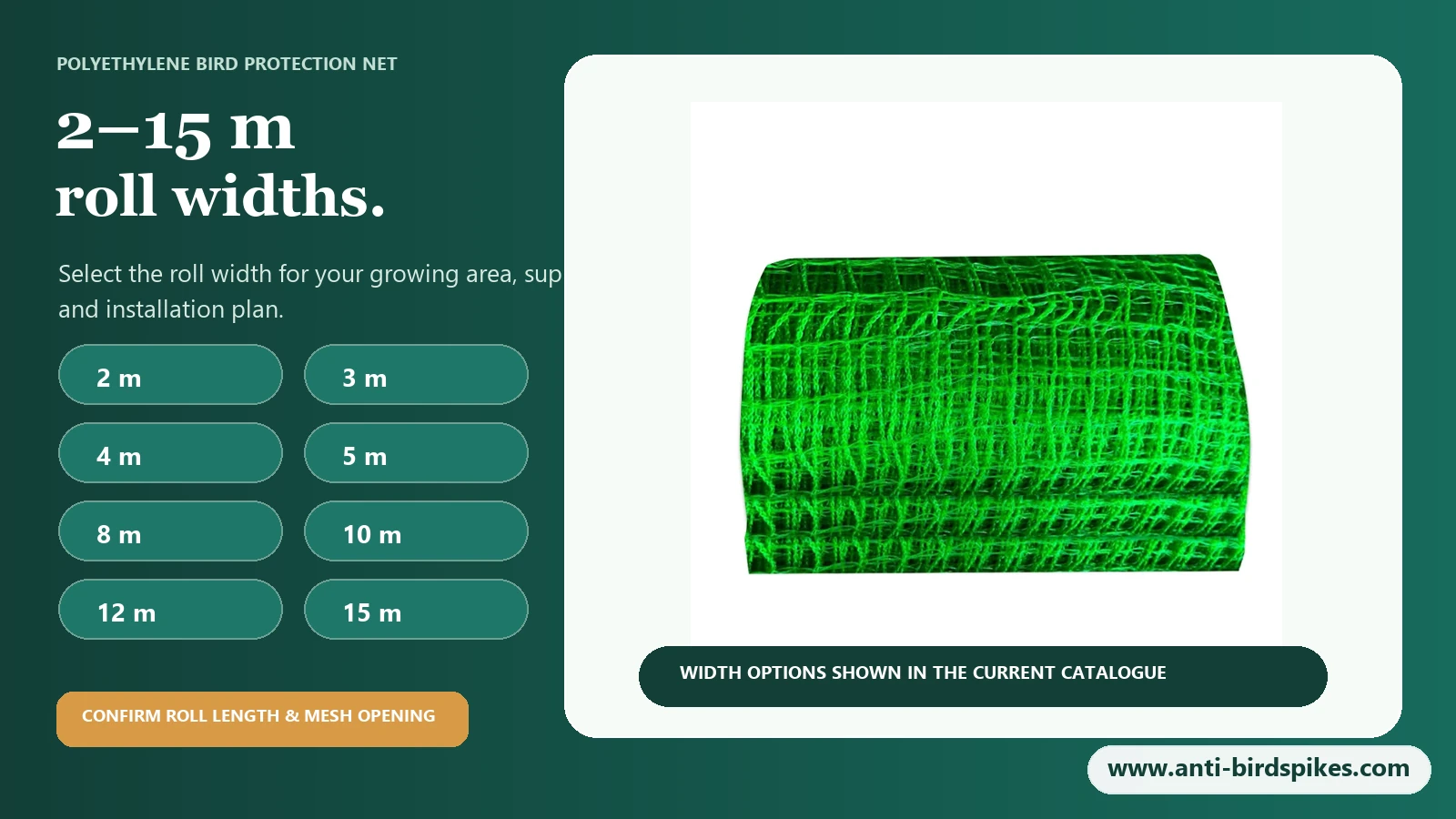
Decide how access panels, pipes and corners will be finished. Include edge tensioning and repair materials in the quotation. The polyethylene bird protection net page gives available roll-width information; final mesh suitability should be confirmed against the measured site.
For procurement, compare products on specification and support hardware, not only price per square metre. A roll with no compatible perimeter plan is not a complete solution.
Ask the installer to hand over the mesh identity, edge method, repair instructions and inspection date. Keep a small quantity of matching material if the site is exposed or difficult to access. Future maintenance should not force a mismatch between the repair patch and the original panel. A labelled sample also lets the next inspection team compare wear without guessing the product type. Store it dry and away from sharp tools so the reference sample remains usable for later repairs at the same site.
Frequently asked questions
What mesh size is best for bird proofing?
The correct opening depends on the target bird, product construction and site. Ask the supplier for a specification rather than choosing by appearance alone.
Can bird proofing mesh be used on a balcony?
It may be used for a supported enclosure or opening, but the layout must preserve access, ventilation and safety.
Does mesh need a frame?
Large or exposed panels generally need a frame, cables or sound fixing points to remain taut. Confirm the system for the measured span.
Can I repair mesh with wire or cable ties?
A temporary repair may be possible, but it must not create sharp ends or loose pockets. Use the supplier’s repair method where available.
Continue with the right next step
Choosing mesh for a building or garden opening?
Send the opening dimensions, support structure, target bird and exposure conditions. We can help review the net format and fixing concept.
This guide is general planning information. Confirm local law, product suitability, electrical safety and safe access with qualified professionals before installation.