
Bird spikes or bird netting: the short answer
Both bird spikes and bird netting are physical bird deterrents, but they solve different problems. Bird spikes block birds from landing on a narrow ledge, parapet or AC unit. Bird netting physically excludes birds from a larger open area such as a warehouse ceiling, atrium, balcony or fruit tree canopy. If birds are perching, use spikes. If birds are flying into a space, use netting.
What bird spikes do well
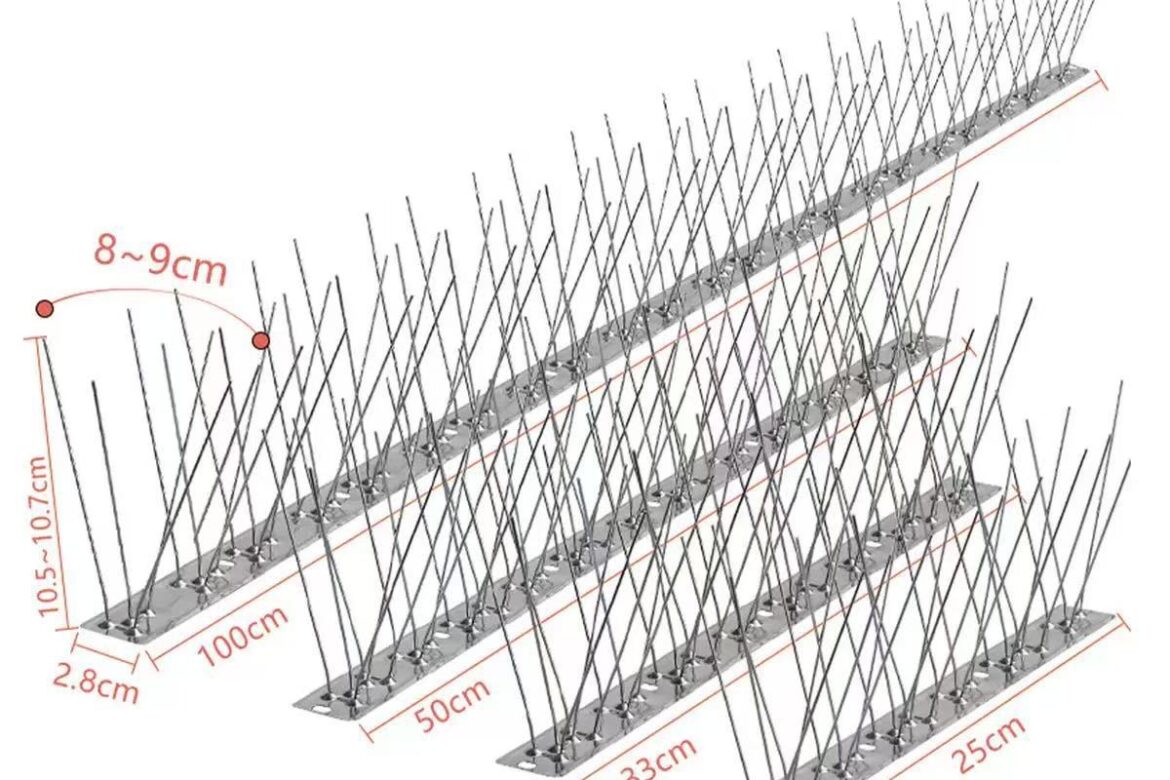
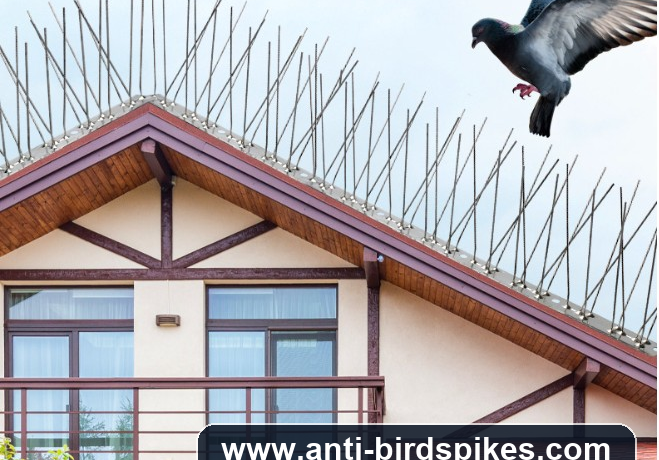
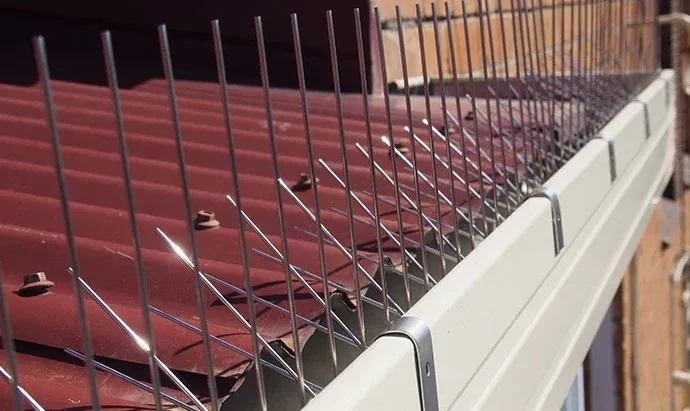
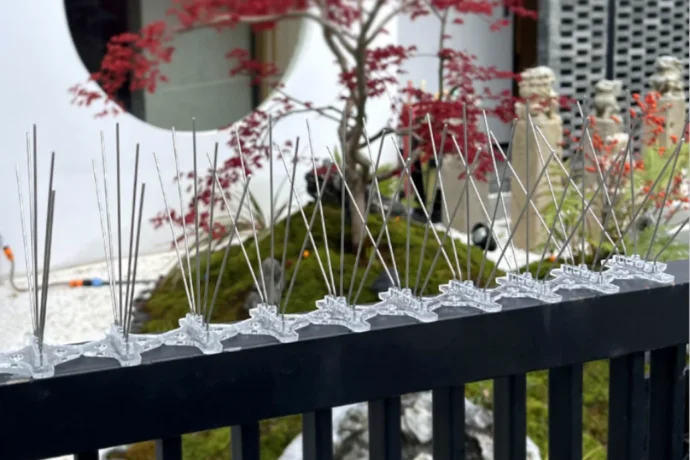
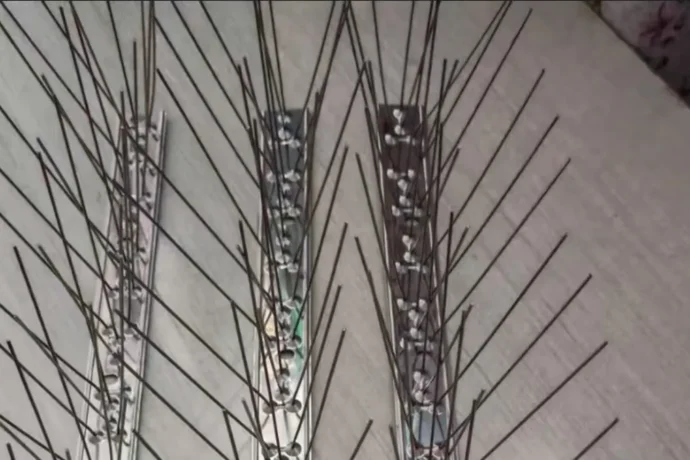
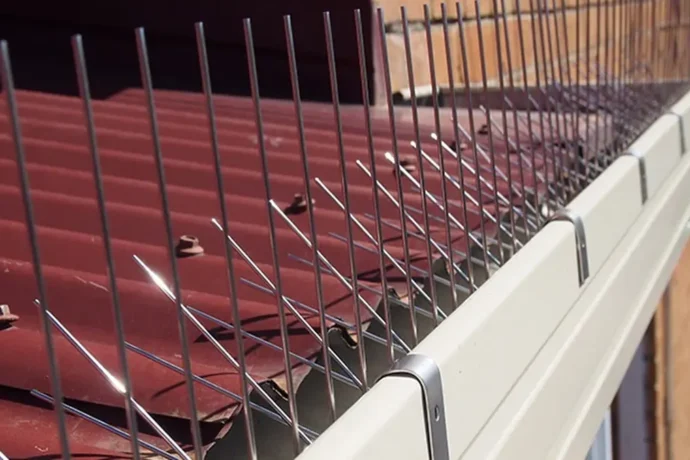
Bird spikes are the standard fix for perching birds: pigeons, sparrows, starlings, crows and gulls. A 304 stainless steel spike strip is fixed along the edge of the surface, and the upward pins make it impossible for a bird to land. The bird is not harmed – it simply chooses another place to rest.
- Best for: ledges, roof edges, signage, gutters, air conditioner units, solar panels, beams and window sills.
- Lifespan: 10-15 years outdoors for 304 stainless steel with a UV-stabilised PC base.
- Maintenance: almost none. Check fixings once a year and remove debris.
What bird netting does well
Bird netting is a physical barrier. A mesh net is tensioned over or in front of an opening so birds cannot enter. It is the only reliable solution for large volumes: loading docks, hangars, stadium roofs, warehouse rafters and orchards.
- Best for: large openings, ceilings, courtyards, balconies, fruit trees and berry crops.
- Lifespan: 5-10 years depending on UV stabilisation and mesh quality.
- Maintenance: re-tension the cable system, repair tears, clear leaves from the mesh.
Cost, installation and maintenance compared
| Bird spikes | Bird netting | |
|---|---|---|
| Coverage type | Linear (edge / ledge) | Area (opening / volume) |
| Installation | Adhesive, screw or cable-tie; DIY friendly | Tensioned cables and fixings; professional for large areas |
| Labour per m2 | Low | Medium to high |
| Visibility | Low profile, unobtrusive | Visible mesh |
| Reversibility | Can be removed cleanly | More effort to remove |
How to choose the right bird deterrent
- Identify the behaviour. Perching, roosting or nesting on a surface? Use spikes. Flying or walking into a space? Use netting.
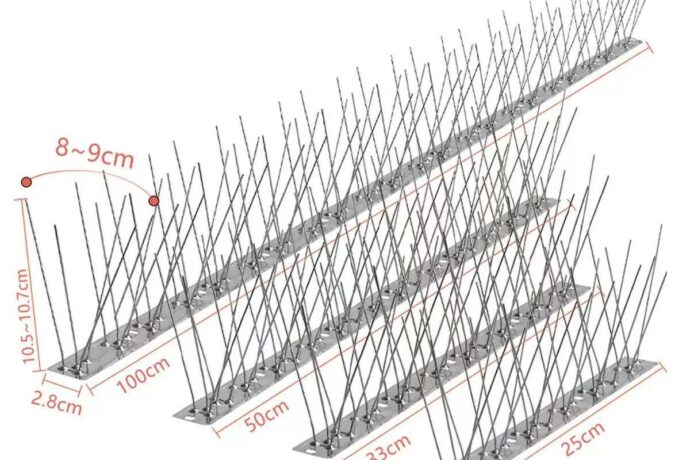
- Measure the surface. Spike strips come in 25 cm, 33 cm, 48 cm, 50 cm, 60 cm and 100 cm lengths; longer strips reduce installation time on long ledges.
- Check the material. 304 stainless steel resists rust in coastal and industrial environments better than 201 grade.
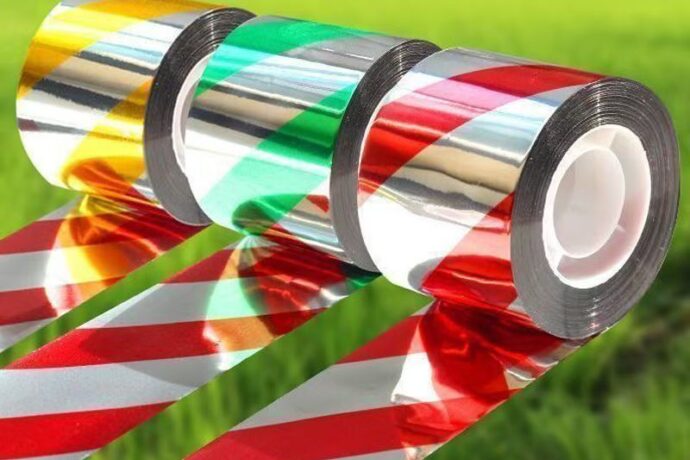
- Add pressure where birds adapt. Where birds move to another ledge, combine spikes with reflective bird scare tape or a bird scare rod.
- Buy spikes for edges, netting for volumes. Most buildings need both.
Frequently asked questions
Do bird spikes hurt birds?
No. Spikes are blunt-tipped and spaced so that a bird cannot land between them. Birds are deterred by the unstable surface, not injured by it.
Can I install bird spikes myself?
Yes for ledges and AC units. Clean the surface, apply the adhesive or screw the base, and leave a small gap between strips. Large roof areas are faster with a professional installer.
How many bird spikes do I need?
Cover the full depth of the landing surface and add 10-15% for cutting waste and corners. A 50 cm strip covers roughly 50 cm of ledge.
Buy bird spikes and bird deterrents direct from the factory
Anti-Birdspikes manufactures 304 stainless steel bird spikes, reflective bird scare tape, bird scare rods and cat repellent mats in Yantai, China. We supply distributors, pest control companies and installers worldwide with OEM/ODM service, private label and bulk wholesale pricing. Browse the full product range or request a quote.

Leave a comment