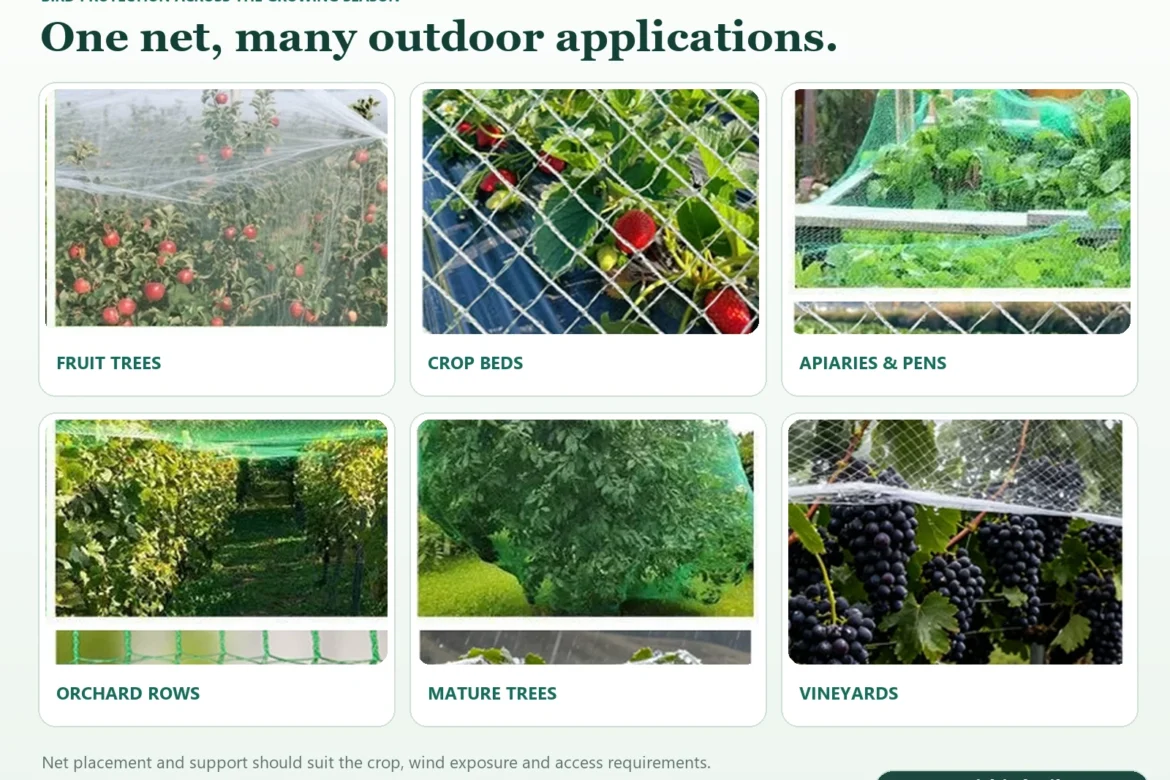
Fruit trees / growing beds / safe exclusion
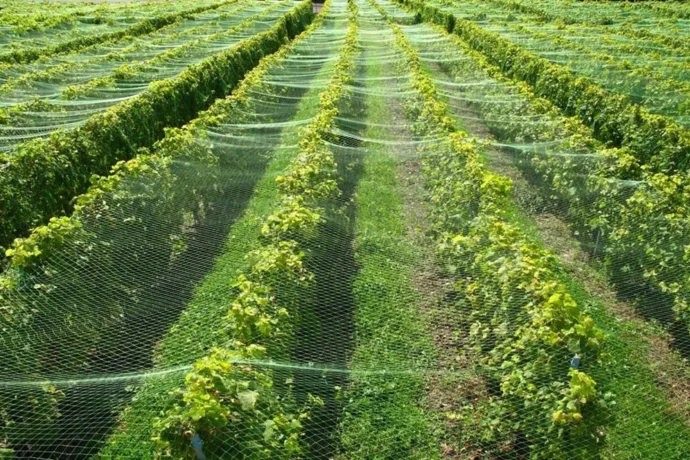
Bird netting for trees protects fruit and foliage by placing a physical barrier between birds and the crop. For reliable protection, cover the whole fruiting zone, support the net above the branches, keep the lower edge controlled and check the installation often enough to prevent birds from becoming trapped.
The same method applies to bird netting for fruit trees and general garden bird netting. In a mixed garden, tree netting for birds must cover the canopy and the ground-level entry route; selecting fruit tree bird netting by width alone is not enough.
Why bird netting for trees needs full coverage
| Layout | Use when | Watch closely |
|---|---|---|
| Drape cover | A small, compact tree with a sturdy branch structure | Fruit contact, ground gaps and chafing |
| Frame-supported canopy | Fruit needs clearance from the net | Frame stability and wind load |
| Orchard-row enclosure | Several trees share a repeated row | End closures, access and tension |
| Whole-block cover | Commercial blocks with engineered supports | Codes, wind uplift and maintenance plan |
A draped net is economical for a single small tree, but it should not press heavily on blossom, young shoots or ripening fruit. A simple frame or hoop can keep the mesh clear while still allowing rain and air movement.
Measure the tree and the crop zone
Measure after pruning but before fruit becomes attractive to birds. Record the height, the widest branch spread and the height of the lowest fruiting branch. For rows, include the gaps between trees and the area needed to close the ends.
- Canopy height: from ground to the highest point that must be protected.
- Canopy spread: the widest span in two directions, not just the trunk-to-trunk spacing.
- Lowest fruit: choose a net height that reaches below the crop and can be secured.
- Support positions: decide whether the net rests on a frame, cable or purpose-made structure.
- Access: leave a clear way to inspect fruit and open the cover for harvesting.
Round up rather than ordering exactly to the canopy. Allow extra mesh for the shape of the crown, fixing at the base and overlap at an opening.
Select mesh for the birds you see
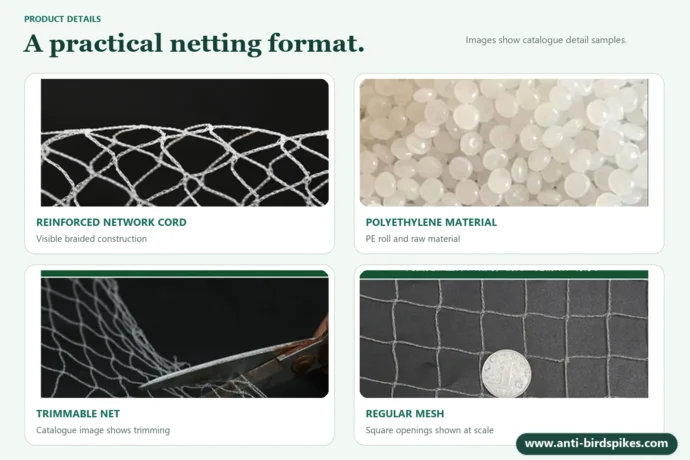
Ask the supplier to confirm the mesh opening. A smaller opening helps exclude small garden birds but can also increase weight and wind resistance. Larger mesh may reduce material but will not protect against a bird that can pass through it. The correct specification should match the crop, target species and support design, not just the colour of the net.
White or light-coloured netting can be easier to see around a garden; green may blend into the planting. Visibility is useful for people, pets and birds approaching the cover. Always confirm colour, width and roll length with the supplier before ordering.
Install the cover in seven steps
- Check for nests. Inspect the tree before covering it and avoid sealing an active nest inside.
- Set out supports. Place frames or poles where they will not damage roots or block mowing.
- Dry-fit the net. Confirm the cover reaches below the fruit and around the whole canopy.
- Lift without snagging. Use enough people and safe access equipment for the size of the net.
- Close the lower edge. Gather or fix the surplus so birds cannot enter from the ground.
- Remove tension pockets. Smooth the cover without stretching the mesh or bowing the frame.
- Inspect immediately. Look for a bird inside, sharp branch contact and damaged mesh.
Netting versus spikes and reflective tape
| Method | Best fit | Limitation |
|---|---|---|
| Bird netting | Direct protection of fruit or a growing area | Needs full coverage and regular inspection |
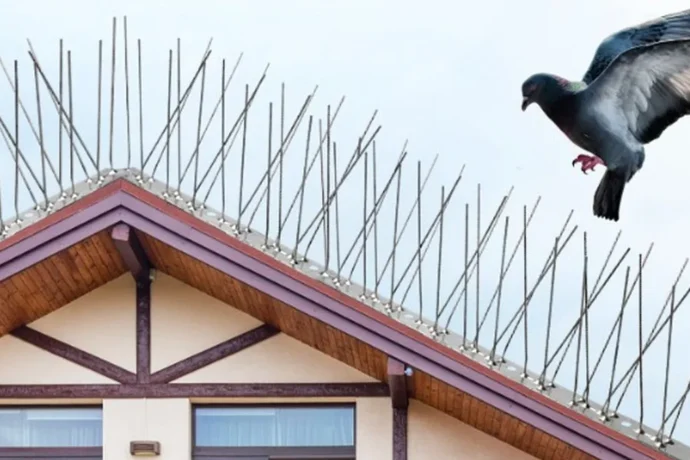
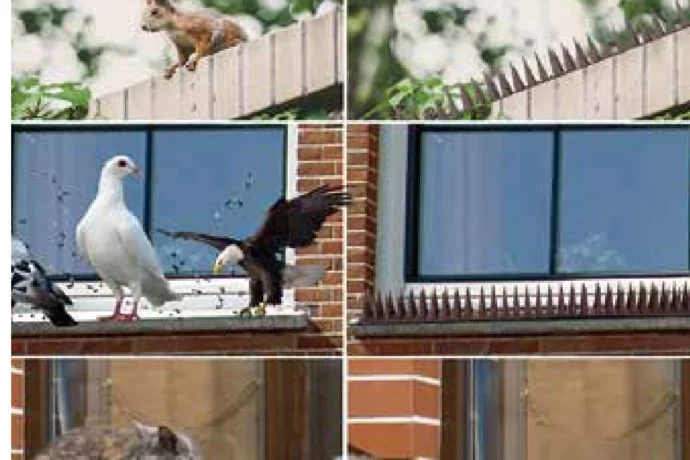
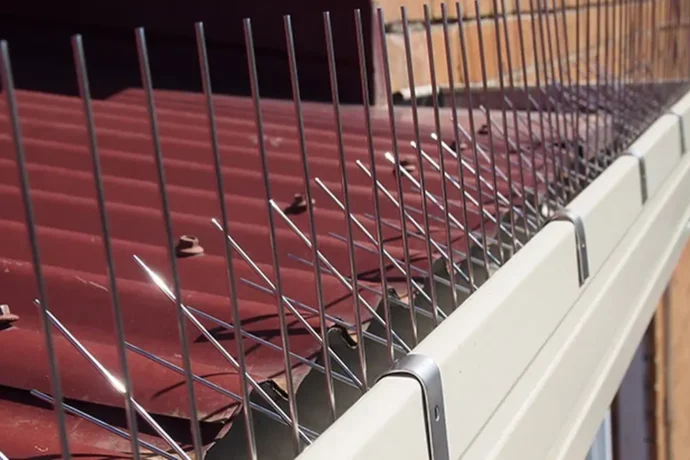
| Bird spikes | A narrow landing edge on a building or structure | Does not stop birds feeding among branches |
| Reflective tape | A short-term visual deterrent in open areas | Birds may adapt; movement and weather affect results |
Prevent birds becoming trapped
Never leave loose netting on the ground or partially wrapped around a tree. Check the cover after wind, before harvest and during nesting season. If a bird is caught, stop work, allow a safe release and involve local wildlife advice if needed. Follow local rules for active nests; in the United States, the Migratory Bird Treaty Act is a starting point, but state and local requirements may also apply.
Frequently asked questions
Does bird netting need to touch the tree?
It can drape over a small tree, but a frame that keeps the mesh away from fruit and growing tips reduces chafing and makes inspection easier.
What mesh size works for fruit trees?
The opening must be smaller than the target bird can pass through. Ask the supplier for the exact mesh dimension and test the choice against the species causing damage.
Can I leave the net on all year?
Follow the product specification and inspect it regularly. Remove or adjust it when it blocks pruning, harvesting or maintenance, and repair damage before the next fruiting season.
What information is needed for a quote?
Send tree or row dimensions, target birds, preferred cover style, mesh requirement, colour, quantity and delivery country.
Share the tree or row dimensions, mesh requirement, quantity and delivery country.
Email: winnie@anti-birdspikes.com or info@anti-birdspikes.com
WhatsApp: +86 132 0535 1335
Prepared by the Anti-Birdspikes product team · Reviewed November 7, 2026. Confirm mesh opening, support design, weather suitability and local wildlife requirements before installation.