
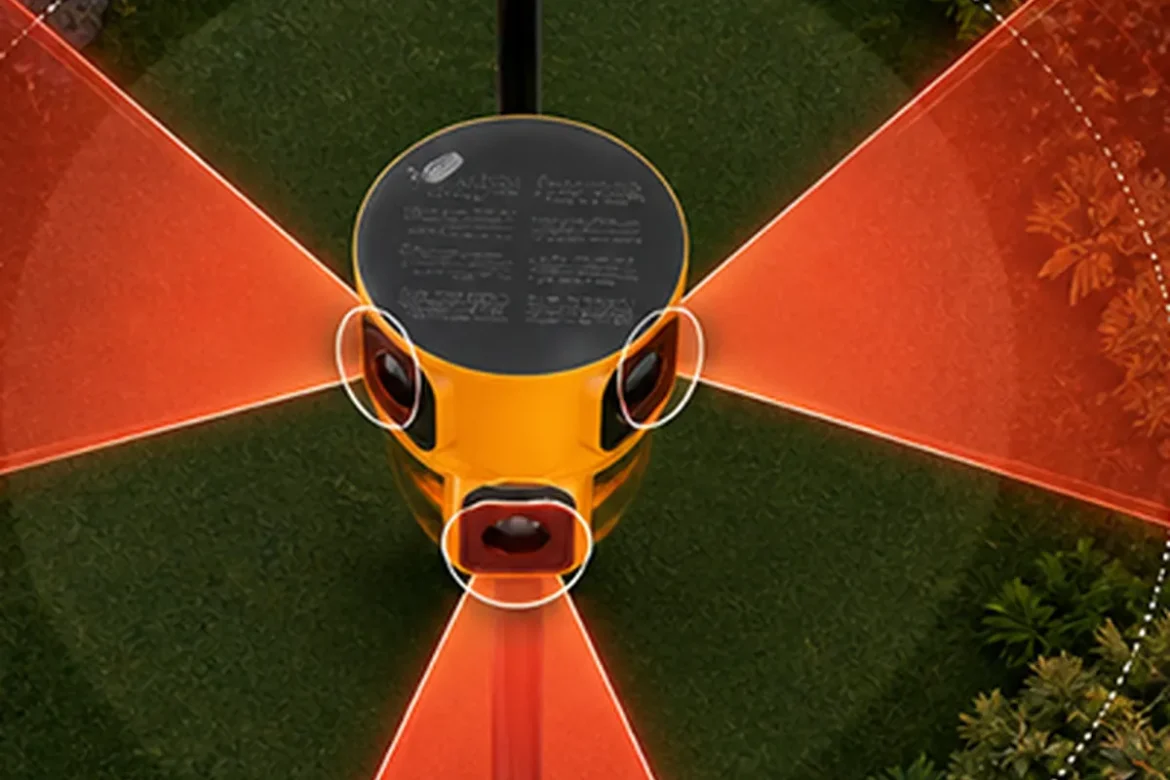
Do ultrasonic bird repellents work? They can trigger a startle response in some settings, but ultrasound is not a guaranteed bird-control solution. Many birds have limited sensitivity to the high frequencies used by consumer devices, and repeated sound can quickly become background noise. Performance depends on the species, the type of sound, speaker output, placement, power supply and what attracts the birds to the site.
That answer matters for buyers comparing low-cost solar animal repellers. A product can have a motion sensor, flashing light and several alarm sounds while still behaving very differently from the “ultrasonic” claim on its packaging. The practical question is not whether a device makes sound. It is whether the target bird perceives the output, associates it with an unpleasant event and cannot easily move around it.
- How ultrasonic and audible bird-repellent devices differ
- What peer-reviewed and university extension research says
- Why results vary between pigeons, garden birds and larger animals
- A practical site test and buying checklist
- When physical exclusion is the more dependable choice
What is an ultrasonic bird repellent?
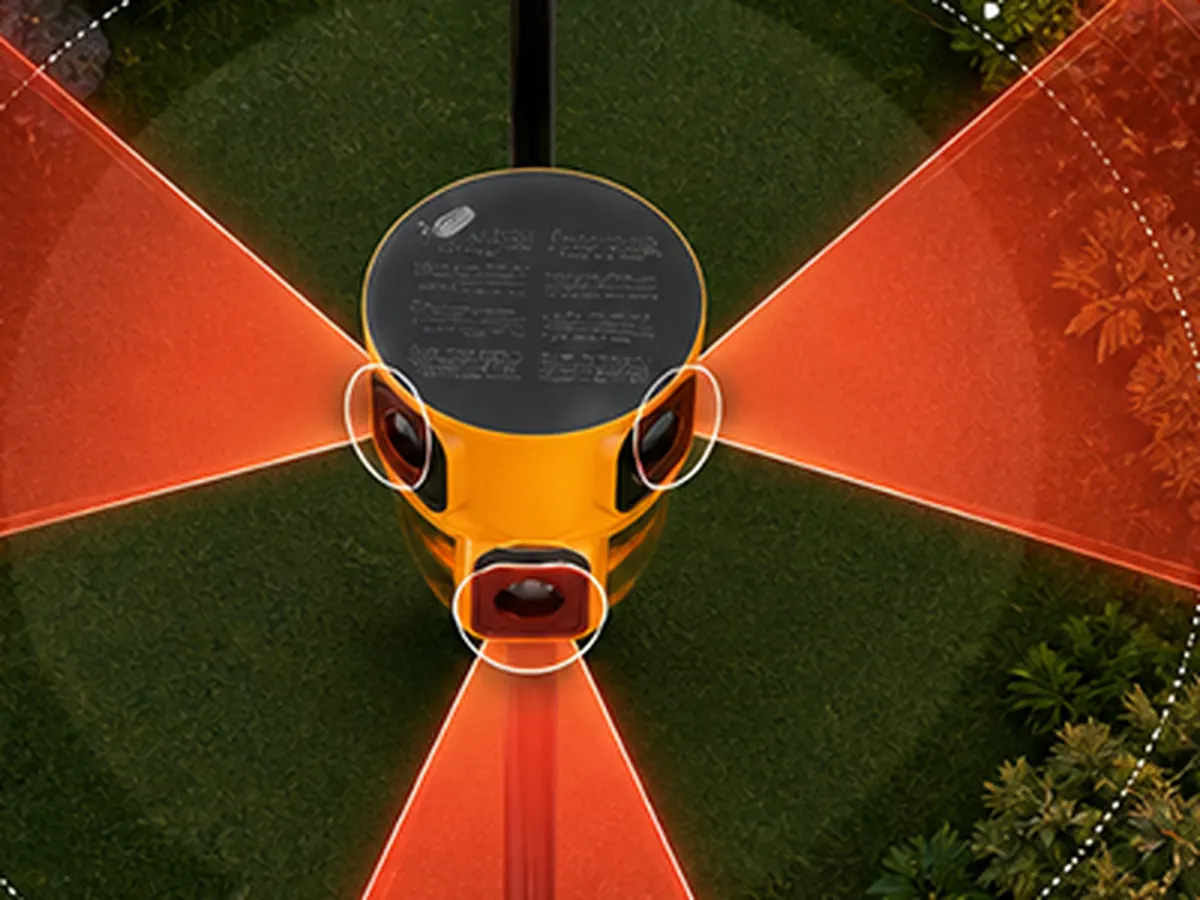
An ultrasonic bird repellent is a device that emits sound above the range people generally hear, often above 20 kHz, to discourage birds from entering an area. Many products combine ultrasound with audible alarms, flashing lights, motion sensors or recorded sounds, so buyers should evaluate each output separately.
“Ultrasonic” is a frequency description, not a performance guarantee. Output level, frequency range, timing and the hearing ability of the target species all affect the result. A device marketed for every bird and animal should therefore be assessed with more caution than a model designed around a defined species and installation environment.
Do ultrasonic bird repellents work?
The evidence is mixed but generally cautious. University extension reviews have found that ultrasound alone is unreliable for bird control. Montana State University Extension states that high-frequency sound above 20 kHz has not proven effective in research trials because birds, like people, often do not hear it. The University of Arizona Cooperative Extension reaches a similar conclusion for ultrasonic pest-control devices and recommends directing time and resources toward methods with stronger evidence.
This does not mean every electronic deterrent is useless. More capable acoustic systems can combine motion detection, changing sounds, flashing lights and higher sound pressure. A 2024 pear-orchard field study reported substantial reductions in bird pecking with a computer-vision-triggered acoustic system. A 2025 study published in Nature Scientific Reports also examined how high-frequency, high-amplitude sound can strengthen deterrence under controlled conditions.
The distinction is important: a carefully timed, high-output acoustic system with site-specific deployment is not the same as a small solar unit that repeats a fixed ultrasonic tone across a wide outdoor area. Use the evidence to ask better product questions, not to accept a blanket “works on all birds” claim.
Why do results vary so much?
1. Species and hearing range
Bird hearing varies by species. A signal that startles one animal may fall partly outside another animal’s useful hearing range. This is one reason a product tested on laboratory rodents or insects should not be assumed to work the same way on pigeons, sparrows or larger farm animals.
2. Sound type and output
A fixed ultrasonic tone, a sweeping frequency, a predator call and a 120 dB alarm are different stimuli. Buyers need to know which mode is active, whether volume is adjustable and how the product behaves after dark.
3. Placement and obstruction
Sound is directional and is reduced by walls, foliage and distance. A device mounted behind the birds, too low, or far outside the claimed coverage area may never produce a useful response. The sensor also needs a clear view of the approach zone.
4. Habituation
Birds learn. A sound that causes an immediate response can become normal after repeated exposure, especially when it never changes and birds learn that it produces no real threat. Random timing, changing modes and combining deterrents can reduce habituation, but cannot eliminate it.
5. Competing attraction
A device cannot easily overcome a strong food source, a secure roost or an active nest site. If birds have a compelling reason to remain, sound is working against the site itself. Removing food and sheltered landing areas is often more effective than adding another alarm.
6. Power and weather
Solar devices need enough battery capacity to work through cloudy periods and at night. Water ingress, weak charging or a sensor that activates at the wrong time can create very different real-world results from a short product demonstration.
Ultrasonic, audible and physical bird deterrents compared
| Approach | How it works | Possible fit | Main limitation |
|---|---|---|---|
| Ultrasonic-only device | Emits high-frequency sound intended to startle or annoy | Trial use where the target species is known and the product documents the output | Uncertain response; many birds may not perceive the signal well |
| Audible alarm or predator sound | Uses sirens, calls or recorded voices that people and birds can hear | Short-term protection and motion-triggered alerts in suitable settings | Noise complaints, habituation and disturbance to neighbours or animals |
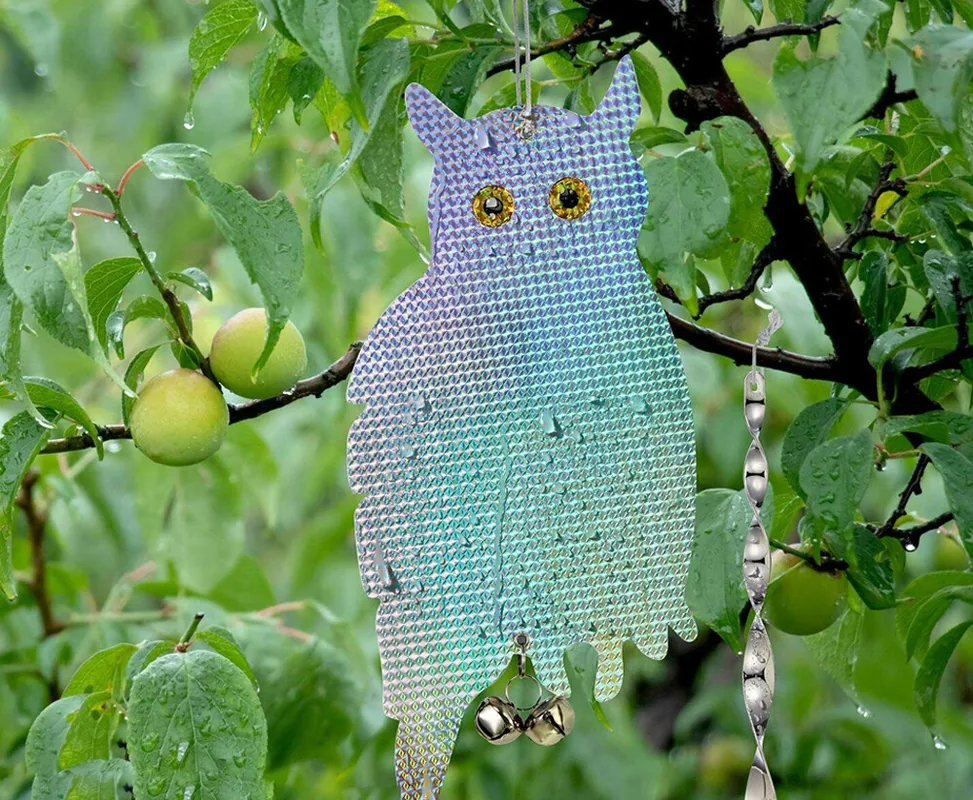
| Visual deterrent | Uses movement, reflection, flashing light or a predator shape | Orchard ends, gardens and temporary scare applications | Birds adapt after repeated exposure; weather reduces effectiveness |
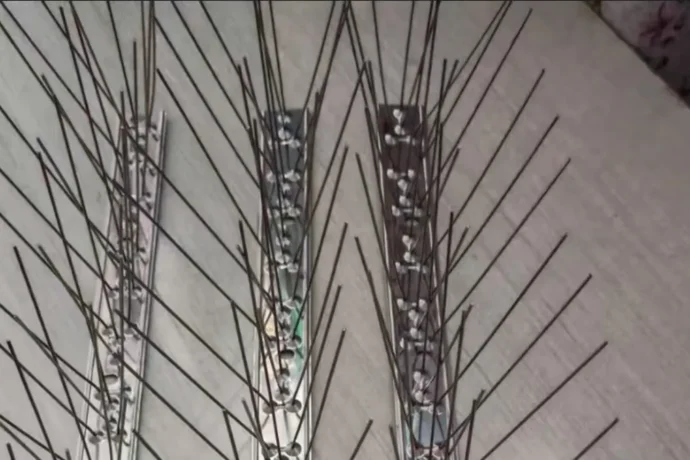
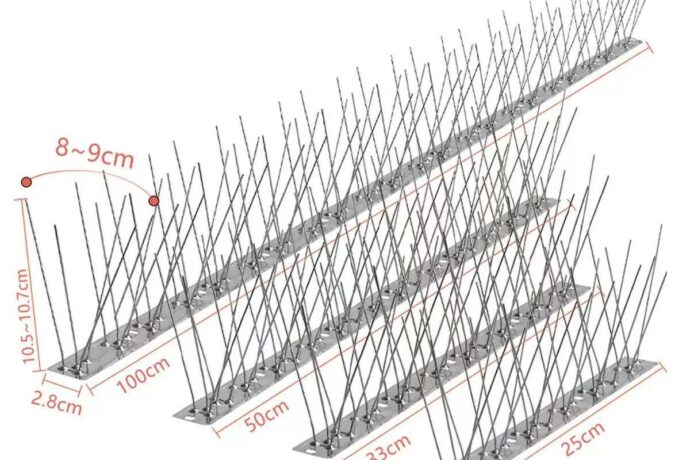
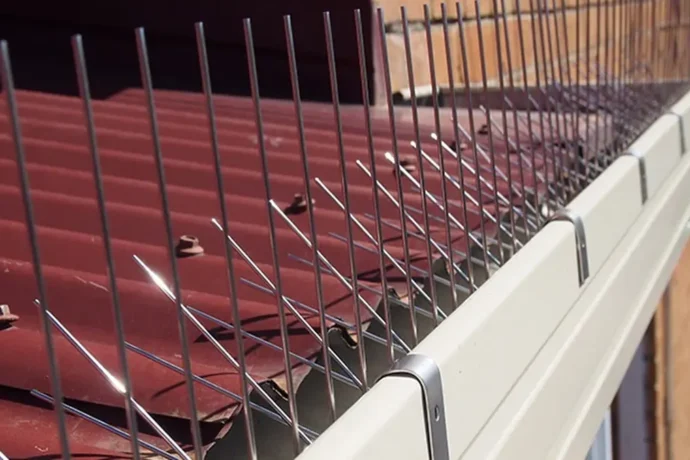
| Physical barrier | Makes a landing surface inaccessible or uncomfortable | Roof edges, ledges, signs, rails, vents and other defined landing points | Needs correct measurement, fixing and maintenance |
How to test an ultrasonic bird deterrent on site
- Identify the species and behaviour. Record where birds land, feed, roost and approach. A pigeon on a narrow ledge and deer entering an orchard present different problems.
- Choose a representative test area. Do not install one unit in a large open site and assume it represents the whole property. Compare the treated zone with an untreated area.
- Confirm the active output. Determine whether the unit is using an ultrasonic tone, an audible alarm, a voice recording, light only or a combination. Test each mode separately.
- Mount within the documented sensing range. Keep the sensor aimed at the approach path, raise it above dense vegetation and protect it from direct standing water where the manufacturer requires it.
- Observe at the high-pressure time. Bird activity often changes at dawn, dusk or during harvest. A quiet afternoon trial can miss the moments when deterrence matters.
- Record results for at least one week. Count landings, droppings or crop damage in treated and untreated areas. Do not treat the first few minutes of reaction as proof of long-term performance.
- Adjust or replace the method. If birds return to the same point, test a different placement, an audible alarm at a respectful volume, a visual deterrent or a physical barrier.
Are ultrasonic bird repellents effective against pigeons?
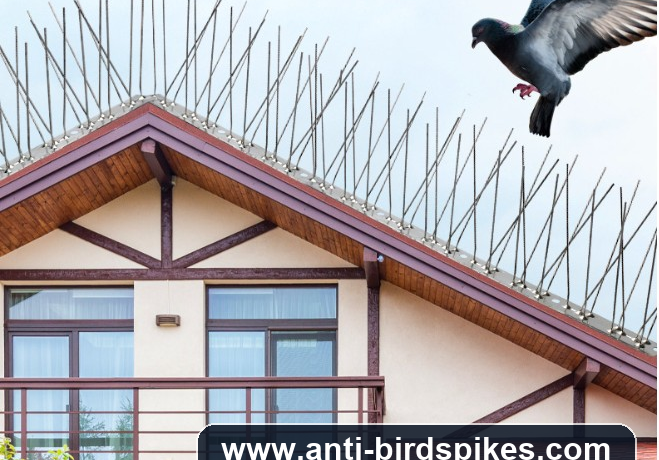
Pigeons are a common target because they repeatedly use narrow ledges, signs, ledges under canopies and rooftop equipment. Ultrasonic-only devices should not be treated as a guaranteed pigeon deterrent. The birds must perceive the signal, connect it with the sensor activation and continue to encounter it, while the landing surface remains available.
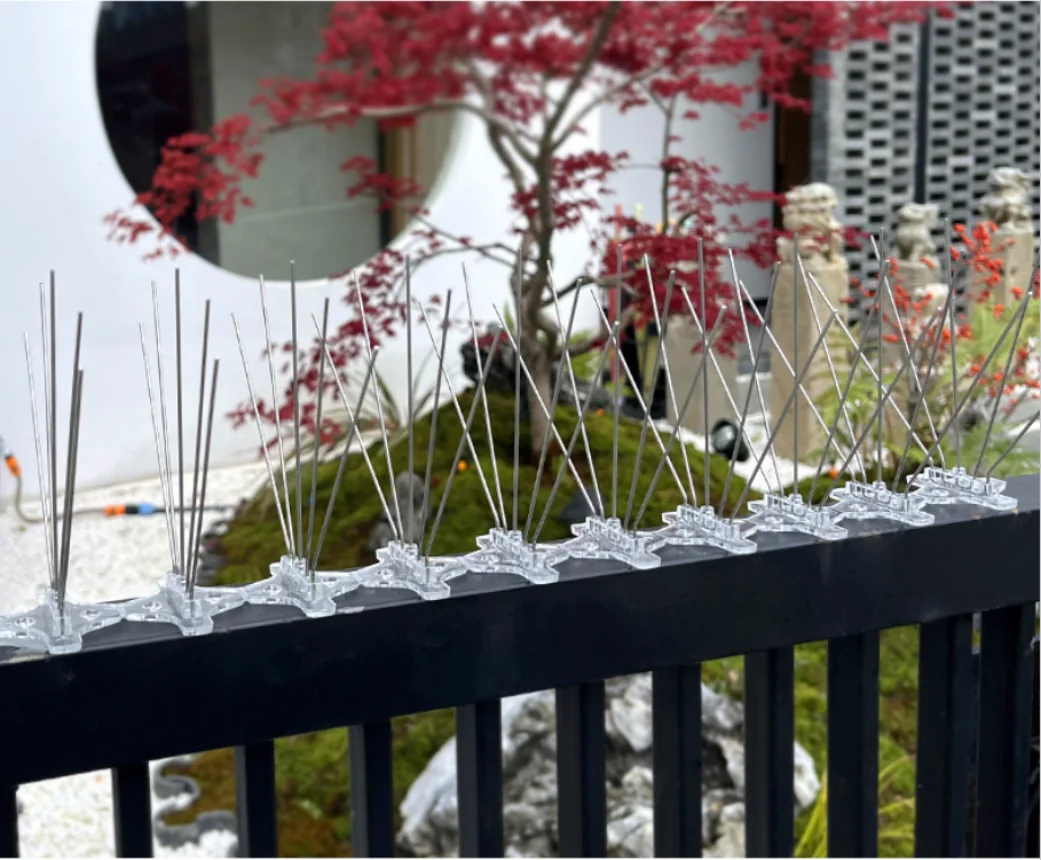
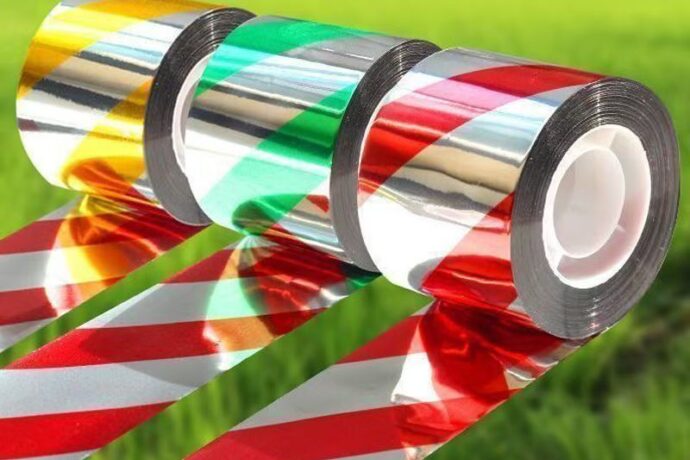
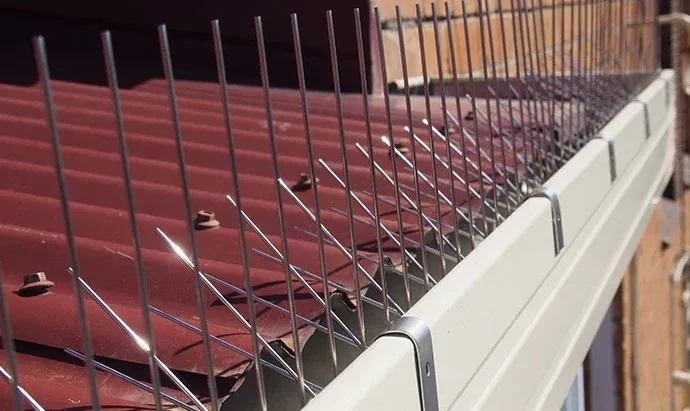
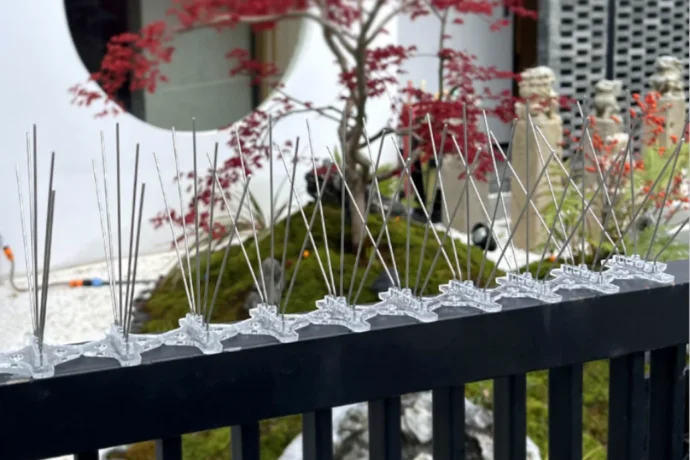
For a ledge, rail or sign where pigeons already land repeatedly, a measured and properly fixed physical barrier is usually more predictable. Bird spikes change the landing surface directly, while reflective bird tape can add visual disturbance in orchards and open spaces. The best choice depends on whether the problem is landing, roosting, feeding or movement through an opening.
What about solar animal repellents used in gardens?
Solar units are convenient because they do not require a nearby power outlet. Their practical value depends on battery reserve, sensor coverage, weather resistance and whether the alarm is appropriate for the site. A device rated for outdoor use still needs a location that receives enough light to recover after nighttime use.
Garden buyers should also consider non-target animals and neighbours. A high-volume alarm that runs repeatedly may deter wildlife briefly while creating a continuing noise problem for people and pets. Keep speakers away from bedrooms and shared boundaries, and use the lowest effective setting. Check local wildlife rules before installing equipment near active nests.
Buying checklist for ultrasonic bird repellent devices
| Check | Question to ask before ordering |
|---|---|
| Target species | Does the supplier explain which birds or animals the product is intended for? |
| Output modes | Is it truly ultrasonic, audible, visual or a combination? Can each mode be selected? |
| Frequency and volume | Are the operating range and maximum output documented in meaningful units? |
| Detection coverage | What sensor type, detection angle and working distance are stated? |
| Power | What solar panel and battery capacity are supplied, and how many hours of standby are expected? |
| Weather protection | What IP rating applies to the enclosure and charging port? |
| Installation | Can it be wall-mounted and stake-mounted without blocking the sensor? |
| Support and trial | Can the supplier provide instructions, a sample or a small trial order before bulk purchase? |
When not to rely on ultrasound alone
- Defined landing surfaces: use spikes, wire systems, netting or another physical barrier where birds have a repeatable perch.
- Active nesting or dense roosting: sound cannot resolve the attraction or access that sustains the problem.
- Noise-sensitive sites: hospitals, homes and shared boundaries may make audible alarms unsuitable.
- Large open areas: coverage claims should be tested carefully; one small device cannot treat an entire field or warehouse.
- Protected species or nesting seasons: check local requirements and avoid disturbing active nests.
What is the practical conclusion?
Ultrasonic bird repellents can be part of a site-specific deterrent plan, but they are not a proven stand-alone replacement for physical bird control. Buy a device with transparent specifications, test it on the actual target species and measure whether landings or damage fall. If the birds keep returning to the same ledge, opening or roost, combine electronic deterrence with habitat changes, visual devices and physical exclusion.
For distributors and installers, that means asking for frequency, sound pressure, sensor range and battery data rather than relying on a broad “ultrasonic” label. If you need help matching a product to a roof, ledge, orchard or animal-entry problem, send the site details to our team.
Sources and further reading
- Montana State University Extension — Non-Chemical Bird Control
- University of Arizona Cooperative Extension — Ultrasonic Pest Control
- PMC — An experimental study of acoustic bird repellents in pear orchards (2024)
- Nature Scientific Reports — High-frequency and high-amplitude sounds and bird deterrence (2025)
- Google Search Central — Creating helpful, reliable, people-first content

Leave a comment