Is your fly trap bottle hanging but the catch still looks low? Before replacing it, run a five-point check. Small changes to location, airflow and the way the bottle hangs can make a garden trap easier for flies to find and less convenient for them to ignore.
What is a fly trap bottle?
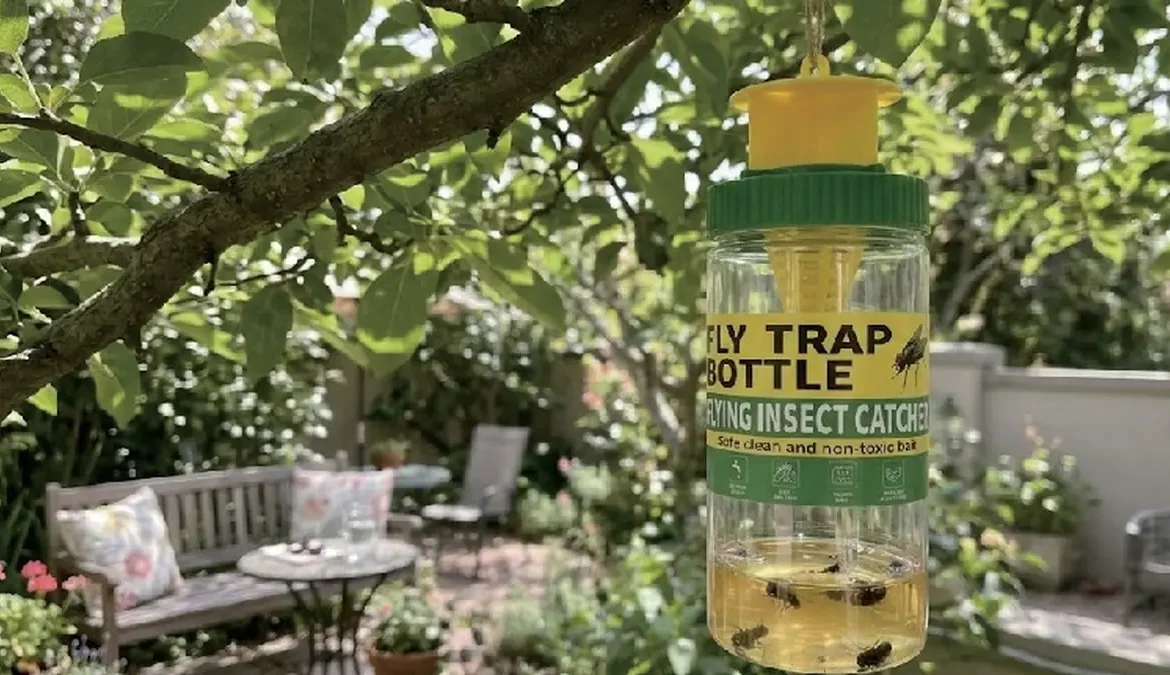
A fly trap bottle is a hanging, refillable or disposable fly-control unit that uses labelled bait and an entry opening to gather flies. It works passively, so placement and routine inspection matter just as much as the trap itself.
Five quick checks for a hanging fly trap
- Start near the fly activity. Look for the flies’ actual gathering area—patio bin, compost edge, animal area or shaded garden corner—rather than choosing the first convenient branch.
- Keep it away from serving areas. Do not hang the trap above a dining table, food preparation area or open doorway. It should attract flies away from the people and spaces you want to protect.
- Give it airflow. A stagnant, enclosed corner can slow scent movement. A ventilated outdoor position helps more flies encounter the attractant.
- Check the hang. The bottle should remain upright and secure without swinging against a wall or tree trunk. Keep the entry opening clear and the hanging point firm.
- Look through the clear body. Check that the bait is mixed as directed and that the bottle is not overfilled, tipped or ready for replacement. Follow the product label for servicing and disposal.
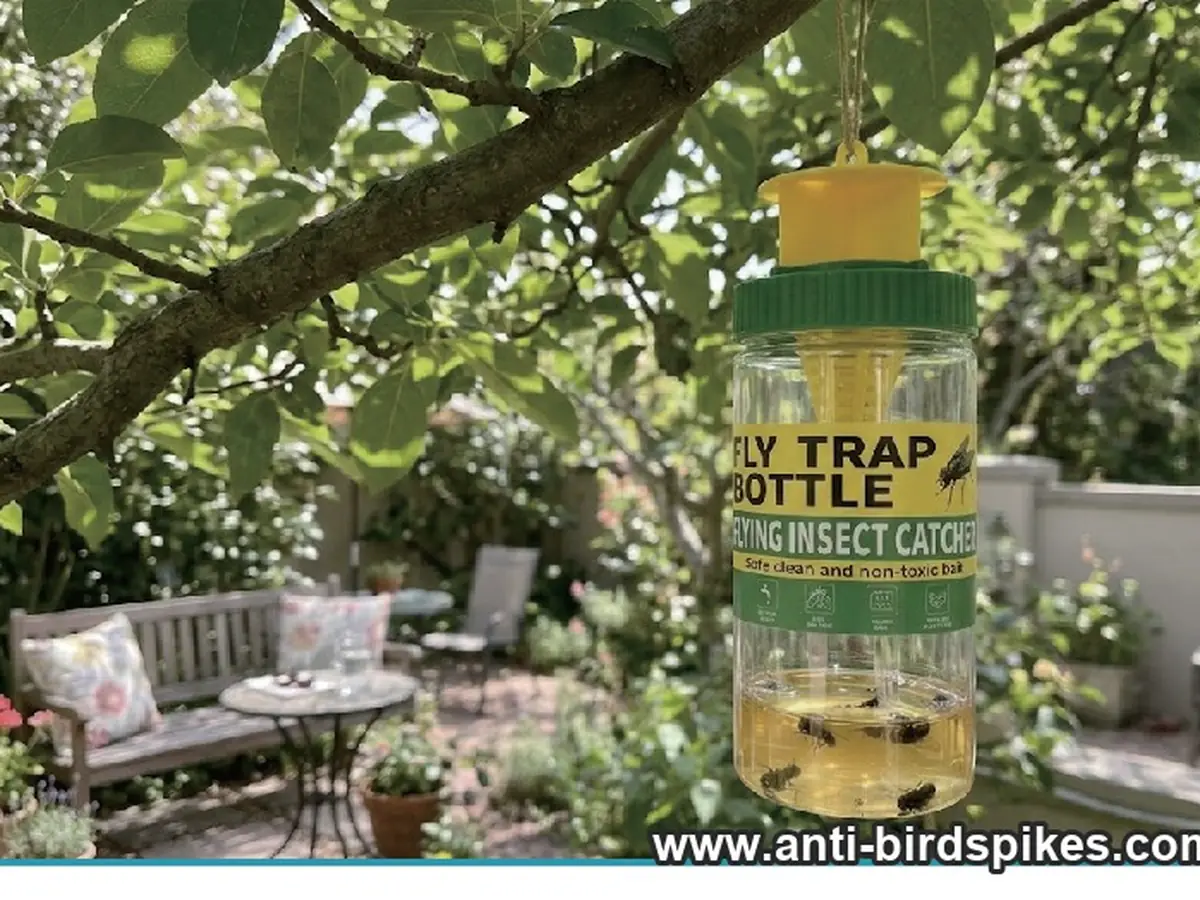
Where should an outdoor fly trap go?
Place an outdoor fly trap near the source of activity, yet away from seating, food, open windows and doors. Choose a sturdy branch or hook, keep the bottle out of reach of children and pets, and prevent bait or spill from entering drains or waterways.
If flies are near but not entering, confirm that the bottle hangs vertically, the opening is unobstructed and the bait level matches the instructions. Source control still matters: remove exposed waste and standing water rather than relying on the trap alone.
A simple maintenance check
Once a day in hot weather: check the hanging point and visible bait level.
Once a week: inspect the entry, clear debris and tighten or replace the hanging cord if needed.
At the label threshold: replace or service the bottle using the instructions and local waste rules.
Frequently asked questions
Why do flies gather nearby but not enter the bottle?
They may be attracted by another food, waste or breeding source first. Move the hanging fly trap closer to the activity while keeping it away from people, and check that the entry and bait are not obstructed.
How quickly should this trap catch flies?
Catch time varies with temperature, fly pressure, bait activation and position. Use the product label for activation and replacement guidance, and assess performance over a sensible period rather than a few minutes.
Can I hang the trap above food?
No. Place it away from food handling, dining areas, open doors and windows. Secure the bottle against tipping and keep it out of reach of children and pets.
Need a hanging trap for your outdoor space?
Tell us the application, expected fly pressure and delivery country. We can help confirm the trap format, quantity and packaging.
For mixing, servicing and safe disposal, follow the current product label. This concise troubleshooting guide is general information, not a substitute for the label instructions. See also our pesticide-free fly trap usage guide.